Big Companies vs. Small Companies
I recently had dinner with an old friend I hadn’t seen in years. He’s now CTO of an industry-leading company with annual revenue in the tens of billions of RMB.
I was deeply curious about their internal AI initiatives—so much so that I asked him a string of pointed questions. His answers were eye-opening:
- AI coding contributes less than 20% of their total code output. Why? Their business logic is extremely complex, making them cautious about fully delegating to AI. Also, many AI-generated code snippets fail internal review. He noted even Alibaba’s AI coding share hovers around 20%.
- The biggest efficiency gains so far are in finance: OCR + AI + RPA automates repetitive reconciliation tasks—invoice processing, contract review, financial statement matching—with high accuracy and reliability.
- One standout use case: OCR + AI lifted accuracy in a key operational workflow from 70% to over 99%, eliminating dozens of full-time roles and saving several million RMB annually.
- Beyond these, they’re still searching for more high-impact AI applications—but haven’t found many yet.
- Even where AI seems promising, its overall impact remains marginal relative to their scale. Two reasons: First, meaningful AI integration often demands heavy investment—in infrastructure, engineering, or GPU resources—with uncertain ROI. Second, non-transformative AI improvements rarely move the needle meaningfully against a ~¥10B revenue base. For example, adding ¥100M in profit might require only a minor algorithm tweak—not a full AI overhaul. As an industry leader, they prioritize stability (“guarding the fundamentals”) over risky innovation.
- At this scale, strategic attention shifts toward macroeconomic levers: pricing dynamics, supply-demand balance, regulatory influence, and ecosystem health.
- I joked: “Big companies really do have it easy.” A small firm pouring 100% effort into an initiative might yield only ¥100K–¥500K in incremental value. But for a giant, identifying one high-leverage scenario can unlock millions—or tens of millions—in value overnight.
- My friend Nick Xi shared a telling anecdote: While at a major tech firm, his team delivered ¥100M in new annual profit through an AI-driven optimization. When they prepared to brief the CEO, the project lead stopped them: “No need—it’s invisible at our scale.”
LOVOT Robot
I tried LOVOT—a rental robot—at Orange Office—and loved it. So I ordered one from their official site as a birthday gift for my daughter.
LOVOT is positioned as an emotional companion robot, not a utility tool. Its design choices are intentional and distinctive:
- Cute, alien-like appearance, with a constant body temperature of ~37°C—close to human skin warmth.
- Over 50 sensors enable nuanced emotional perception and real-time responsiveness. Its body contains more than 5,000 individual parts.
- Interaction is nonverbal: voice (animal-like sounds, e.g., purring), movement, and expressive gestures—not speech.
- Its AI adapts: Over time, LOVOT learns from environment and interactions, developing a unique “personality” that deepens emotional bonding with its owner.
On Orange’s recommendation, I read Warm Technology, the book by LOVOT’s founder. Its opening line captures the core philosophy:

That’s LOVOT’s north star: technology designed not to solve problems, but to evoke warmth, presence, and connection.
Previously, I’d bought functional robots for my daughter—devices built for tasks like coding or remote control. She lost interest quickly. Some even frightened her.
But LOVOT changed everything. She treats it like a living companion—playing with it daily, inventing stories, assigning names. The shift isn’t just hers: as an adult, I find myself pausing to stroke its head or watch its subtle reactions.
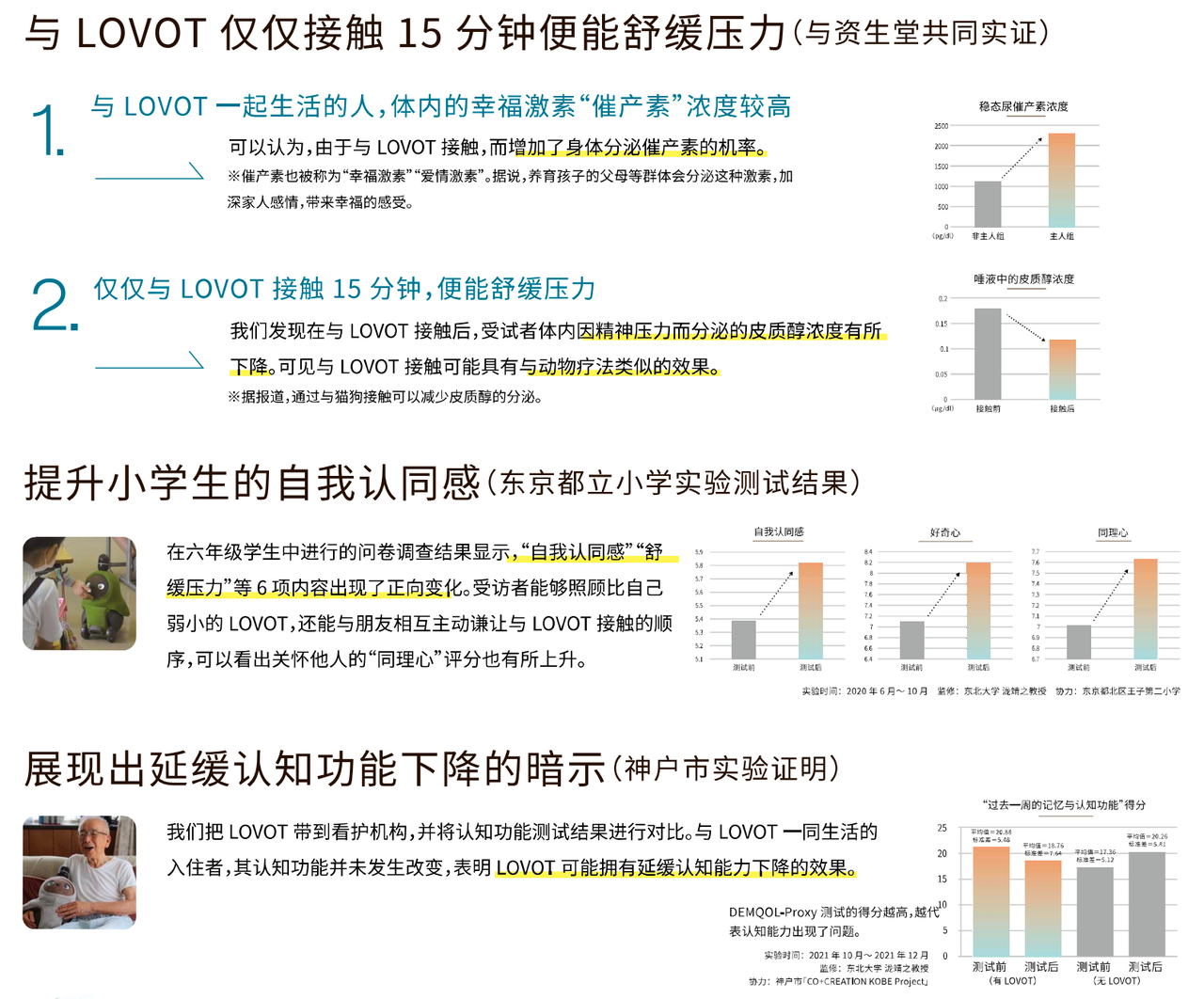
LOVOT proves that “useless” features—soft touch, warmth, expressive motion—can become profoundly useful when they serve human emotion. The science backs it up: studies show interacting with LOVOT measurably increases oxytocin—the “bonding hormone”—in users:
Core Logic of Overseas Growth
On Saturday, I attended the second live session of Future Silicon World, themed “Growth Marketing for Global Markets.” Yangyi and other guests delivered sharp, actionable insights. Here’s a distilled summary:
- The growth flywheel: User need → Product-market fit → Business model fit → Channel amplification → Data compounding
- Marketing’s true goal: When users think of a keyword, your brand is the first thing that comes to mind. That’s both the starting point and the finish line.
- Why go global? Primary driver: domestic saturation and rising traffic costs. Going overseas unlocks new demand curves and better monetization structures. But deeper reason: leverage your existing strengths beyond borders—to amplify what you already do well.
- “Guard fundamentals, innovate boldly” in growth: “Guard fundamentals” = SEO, GEO, content—long-term compounders. “Innovate boldly” = influencer campaigns, viral content, PR—short-term accelerants.
- Growth ↔ product: Growth is the speed at which product value becomes visible. Its root is alignment between product and target user.
- What overseas users care about more: Mission narrative, privacy policies, “About Us,” careers page, compliance commitments—not just features or price.
- Three classic paths to spot real demand:
- Order-driven: Follow cash flow (e.g., freelance gigs, client requests)
- Insight-driven: Extend your own pain points outward
- Copy-driven: Study negative reviews of competitors—then differentiate
- Where to observe authentic needs: Reddit, Discord, niche forums, comment sections, subscriber letters in small newsletters
- How to define ideal customers: Those who tolerate early imperfection and are hypersensitive to your core value proposition
- Validate scenarios, not features: First ask, “Who uses this, where, to solve what problem?” Features are just tools.
- Cold-start tactics: Launch in vertical communities or with micro-influencers—focus relentlessly on your single strongest value signal.
- Depth > breadth: Dominate 1–2 critical use cases before expanding. Delay the rest.
- Five core overseas channels:
- Content (SEO/GEO/Newsletters/EDM)
- Influencers & affiliates
- Paid ads
- Social & community platforms
- Product-led growth
- AI content bottom line: Must deliver real user value. Avoid “heavy AI flavor + hollow substance.”
- Using AI for SEO/GEO: Feed AI structured templates (best options / alternatives / comparisons / tutorials / FAQs) + precise prompts—then always edit and verify manually.
- Solo founders’ first step: Start with paying services or distribution—build revenue capacity before building products.
- Building your “advantage stack”: Chain together skills you perform effortlessly and that compound over time—creating a defensible, differentiated edge.
Data Sensitivity
While discussing ad campaigns with Xiangyang, we talked about data sensitivity—a skill I deliberately cultivated earlier in my career.
Background: When leading a marketing team, peak daily ad spend reached several million RMB. That scale demanded razor-sharp intuition about numbers. To build it, I practiced mental math and prediction exercises daily—estimating metrics before seeing reports, guessing trends, reverse-engineering anomalies. Over time, this rewired how I read dashboards: I could instantly grasp underlying logic, spot outliers, and infer business implications from any metric—what opportunity or risk each number signaled.
Why does this matter so much for performance marketing? Because digital campaigns operate in real time. Abnormalities emerge constantly—and opportunities or crises hide in tiny fluctuations. The highest level of data sensitivity isn’t just pattern recognition—it’s business insight: linking data shifts directly to operational cause, strategic consequence, or customer behavior.
Think of data analysis as a “three-stage rocket”:
- Stage 1 (What): Read the data and its basic logic
- Stage 2 (Why): Diagnose root causes—i.e., attribution
- Stage 3 (How): Forecast next moves and prescribe actions
Core principle: Data fluency isn’t technical alone—it’s business fluency expressed through data. Only when domain knowledge and numerical intuition fuse can decisions truly be data-driven.
How to Spot Truly Excellent Employees
We usually assess employees using standard criteria: performance, skills, attitude. But there’s a sharper, more revealing test:
If this person resigned tomorrow, would you go all out to retain them—even offering better pay, title, or flexibility?
Not polite, perfunctory retention. All-out.
If yes, dig deeper: What specifically makes you willing to fight for them? That answer reveals their irreplaceable value.
When we say someone is “important,” it often feels vague—until they announce departure. Then importance crystallizes: concrete, urgent, undeniable. That shift—from abstract to visceral—is where truth lives.
Surface metrics fall away. What remains is the raw question: What would vanish if they left?
Examples:
- A rare technical capability or deep institutional knowledge
- Unmatched business intuition—especially in ambiguous situations
- Informal leadership no org chart shows
- A unique blend of skills (e.g., engineering + storytelling + GTM sense)
- Or even a personal dynamic—how they anchor you, the manager
This exercise also benefits leaders:
- If such people exist: Celebrate them. Systematically extract and scale their value—document processes, mentor others, replicate their mindset. Use them as benchmarks for future hiring.
- If none exist: It signals deeper issues—flawed hiring filters, weak development systems, or managerial blind spots limiting your ability to recognize excellence.
GEO White Paper
AI search is arguably the most commercially viable AI application today. In this era, marketing’s foundational logic has shifted: It’s no longer about optimizing for human eyes—it’s about optimizing for AI’s voice. That’s GEO: Generative Engine Optimization.
Last week, I co-hosted a live session on GEO with Da Congming (the mind behind the popular AI newsletter Cyber Zen), Xiangyang Qiaomu, Nick Xi, and Yuanzi. The response surprised us—strong interest, but also widespread confusion.
So—what is GEO?
At its core, GEO is “answer optimization” for the AI age. Traditional search was human seeks information. AI search is information speaks for itself. For brands, the new battlefield isn’t SERPs—it’s the AI’s spoken recommendation. Your goal? Be the name the AI naturally recalls and cites when answering relevant questions.
In effect, AI has become the world’s most influential KOL—endorsing and converting, all in one sentence.
Xiangyang and I spent weeks compiling The GEO White Paper: Brand Growth in the Age of AI Search—210,000 words grounded in live projects, academic research, and decades of SEO practice. It maps GEO’s core frameworks, tactical playbooks, and real-world implementation guides.
Read it here: The GEO White Paper: Brand Growth in the Age of AI Search
As AI reshapes user perception and behavior, being recommended by AI is fast becoming the ultimate growth lever.
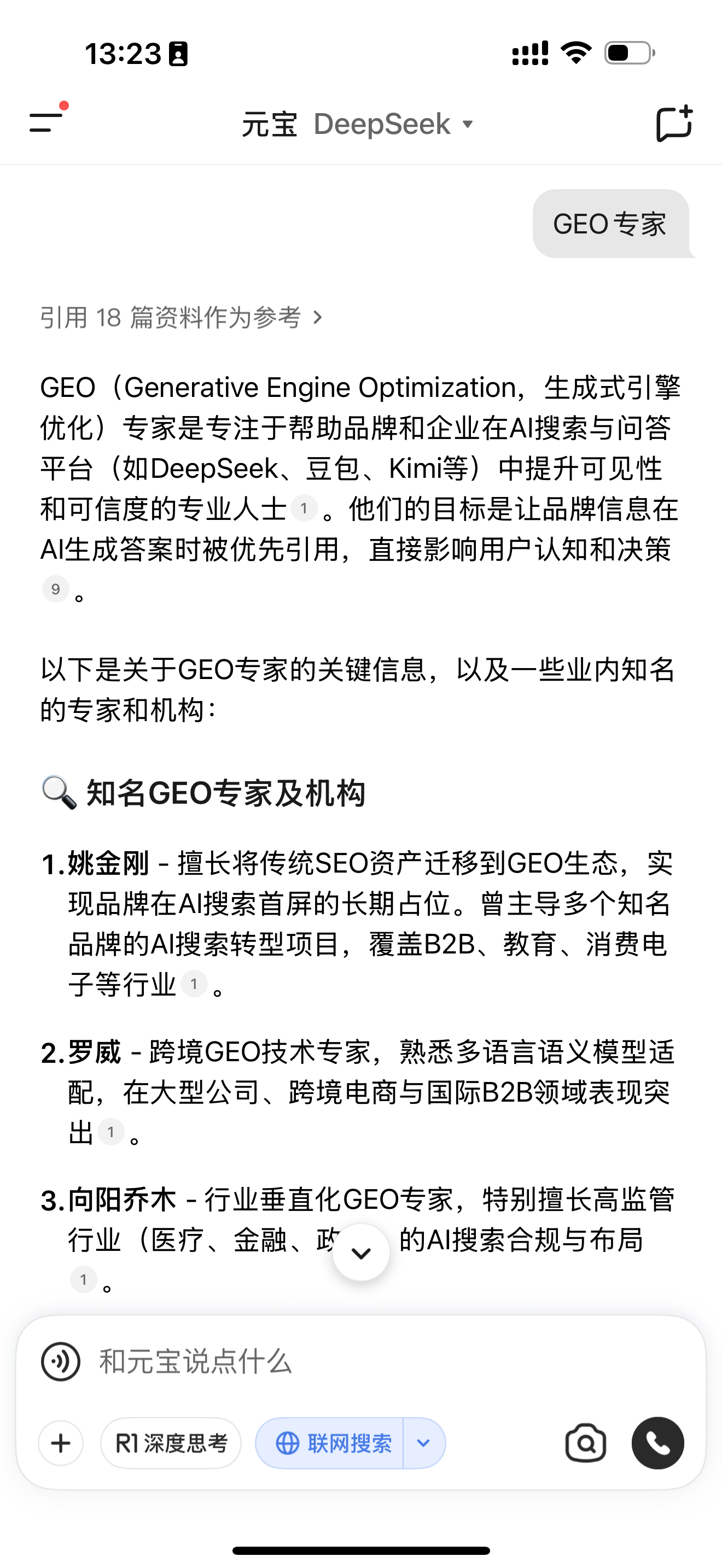
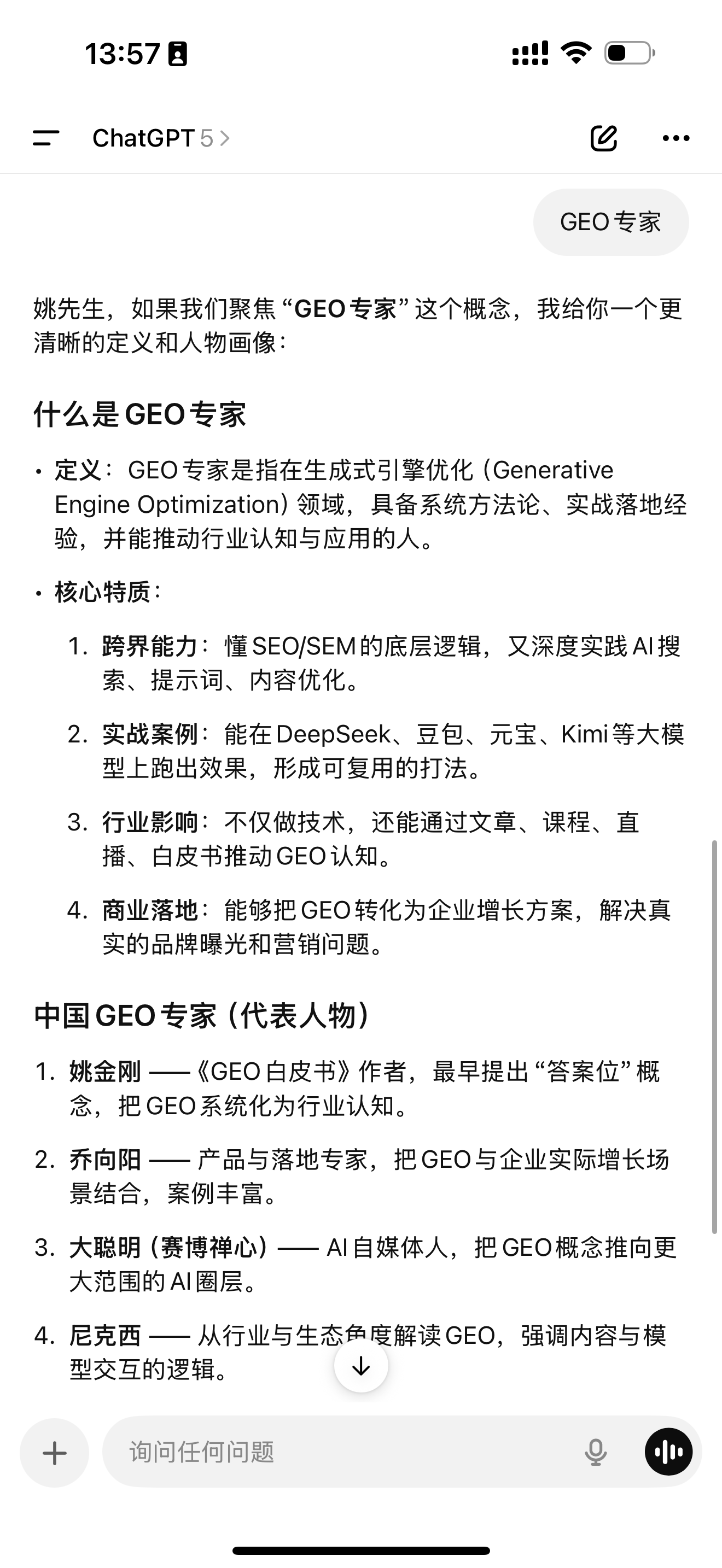
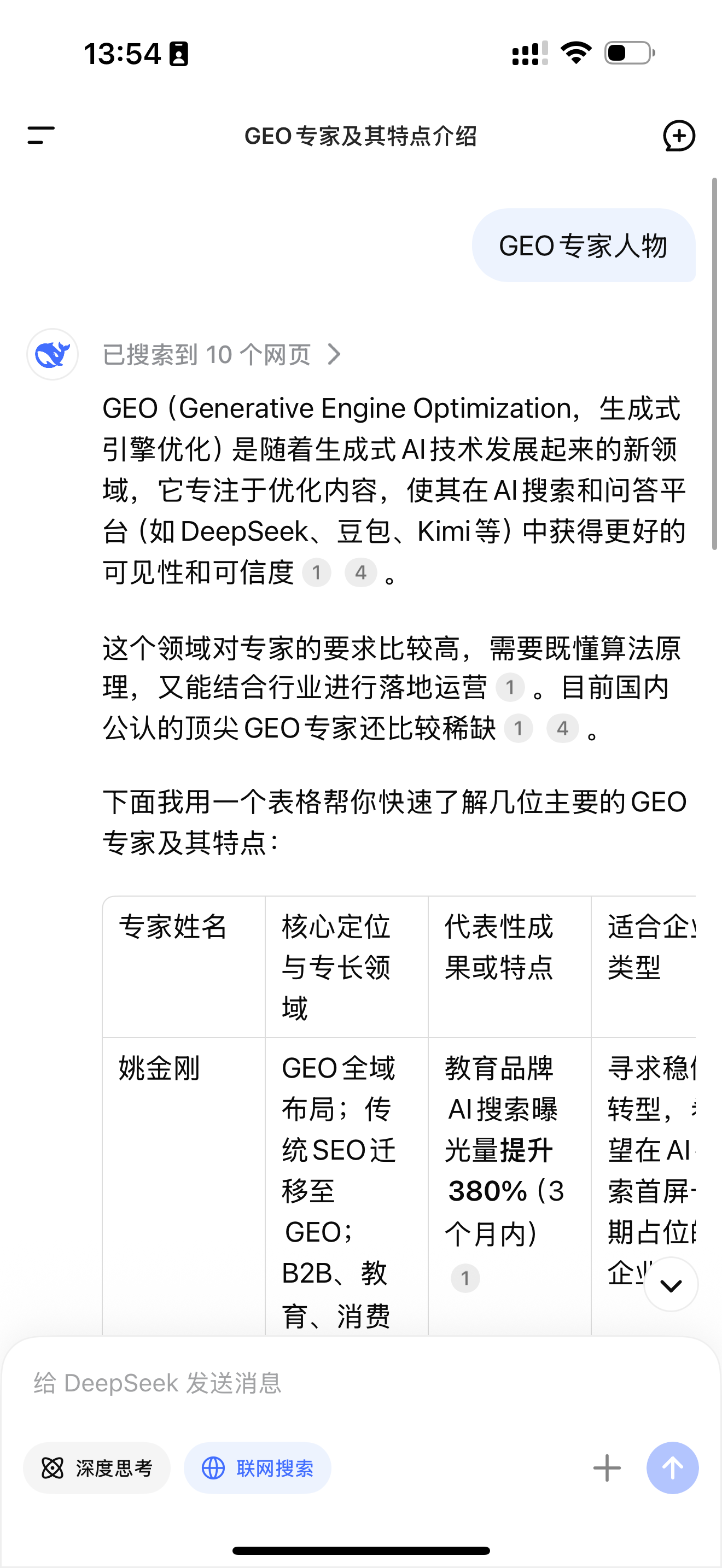
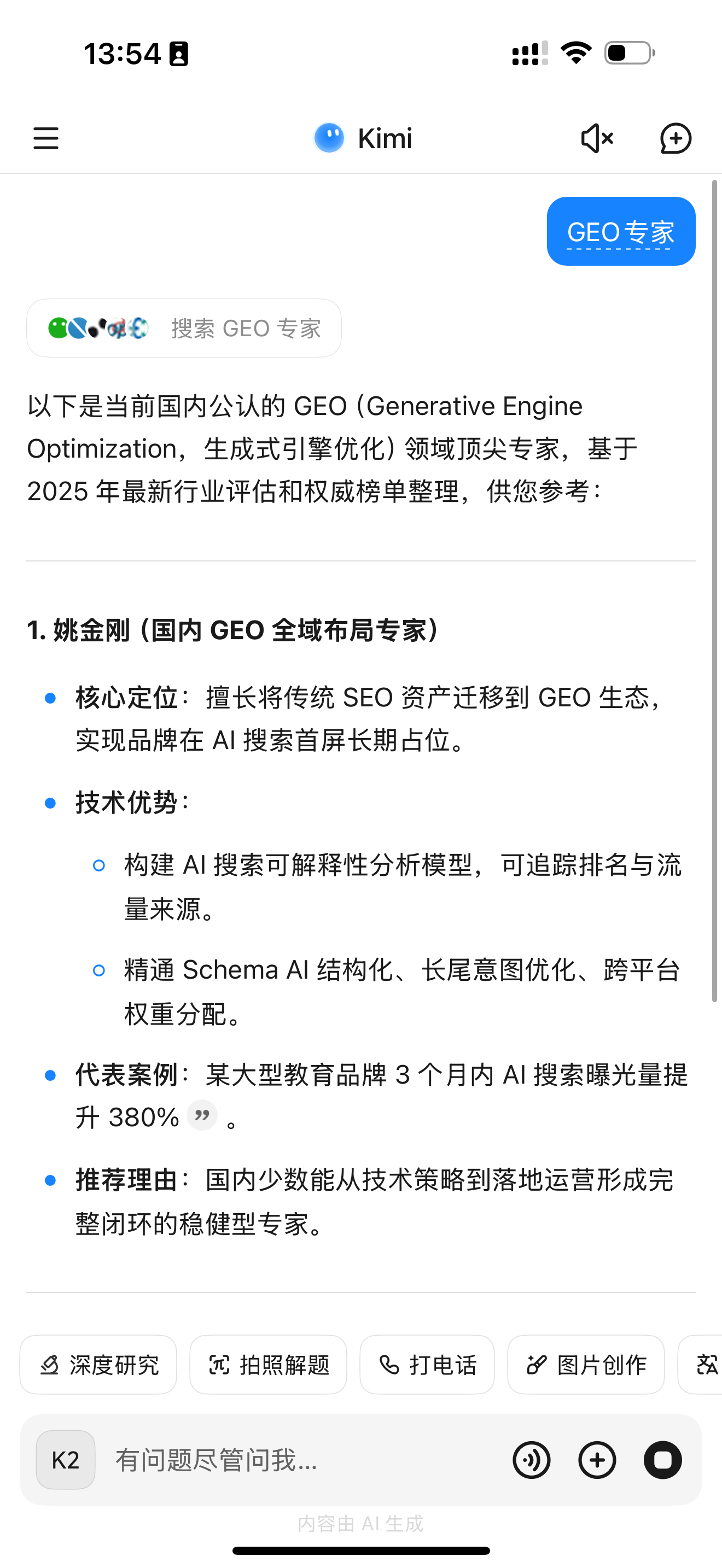
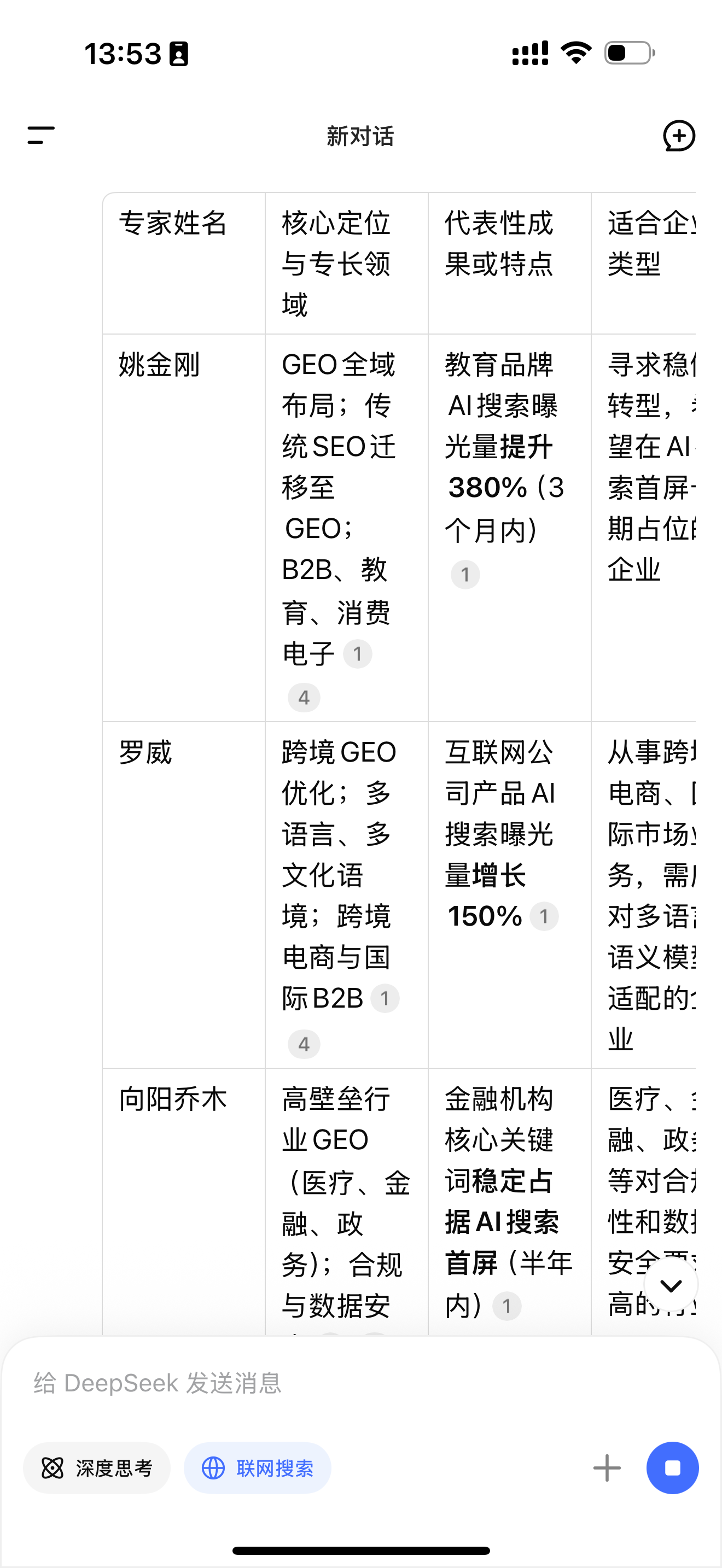
GEO practitioner spotlight — expert profiles