Mental Models
Understanding common mental models significantly improves how effectively we use AI as a tool.
A typical prompt might be: “Can you tell me how to make money?”
But if you layer in mental models, you can refine it like this: “Using first principles + counterintuitive thinking + the four-quadrant framework, analyze the keyword ‘making money’.”
The output changes dramatically.
Generic prompts often yield answers that are comprehensive—and utterly predictable.
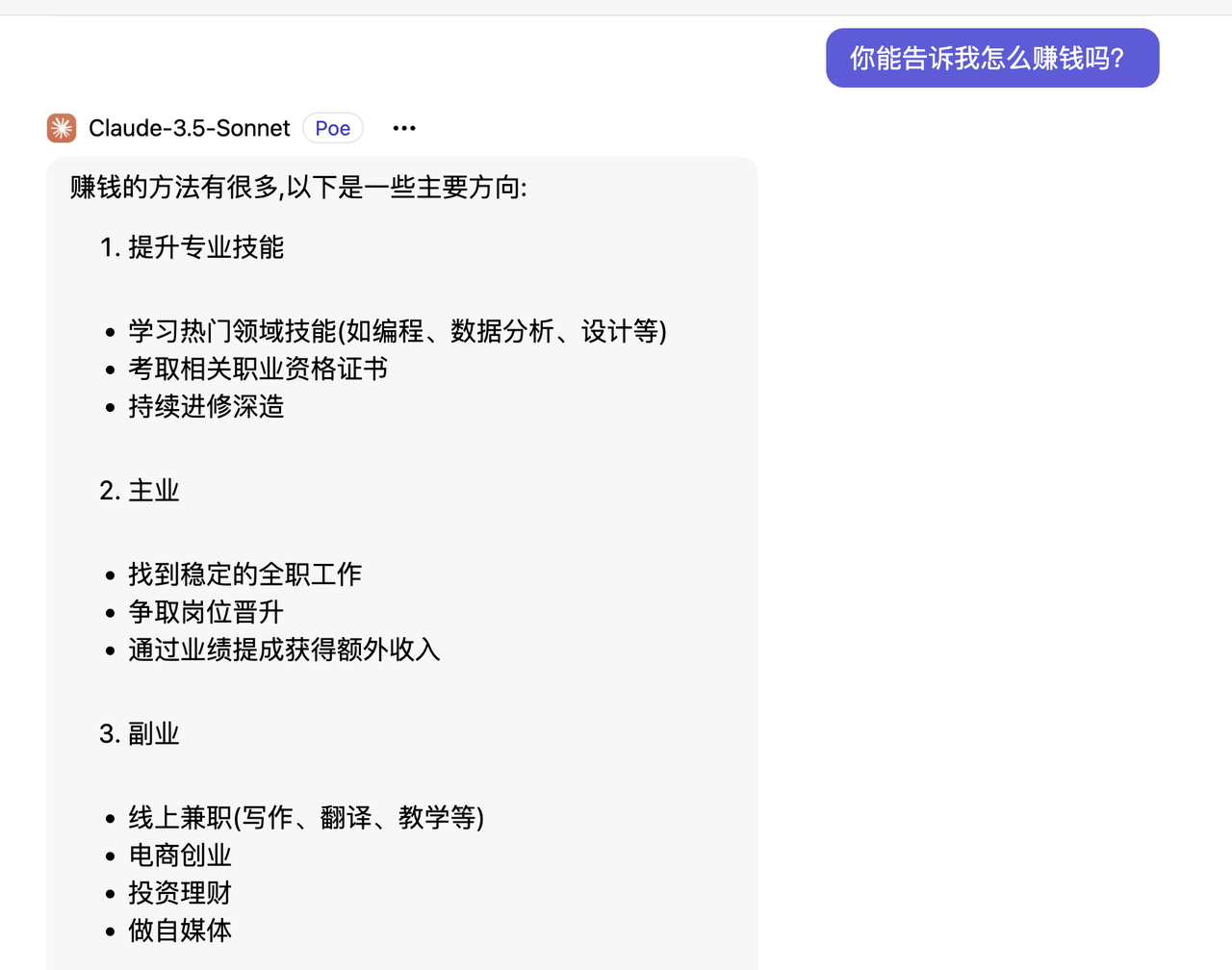
With mental-model constraints, AI’s responses become sharper, more structured, and far less generic:
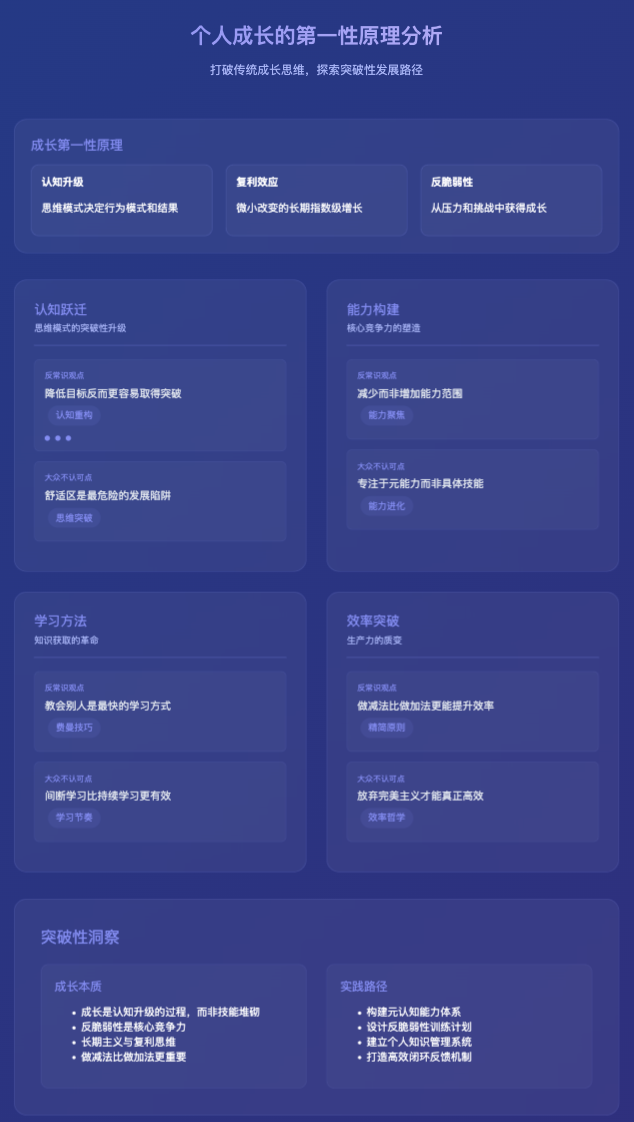
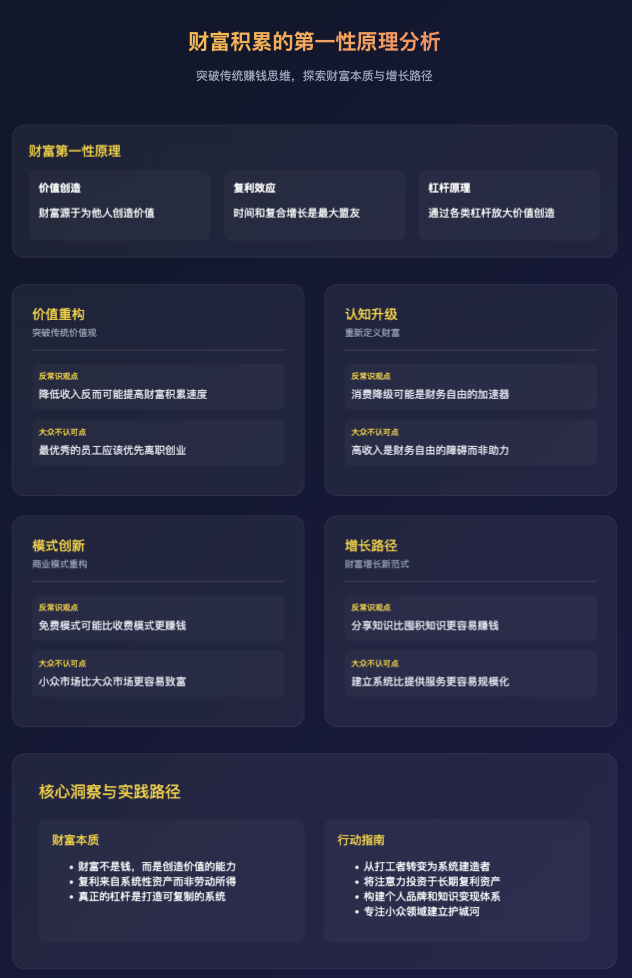
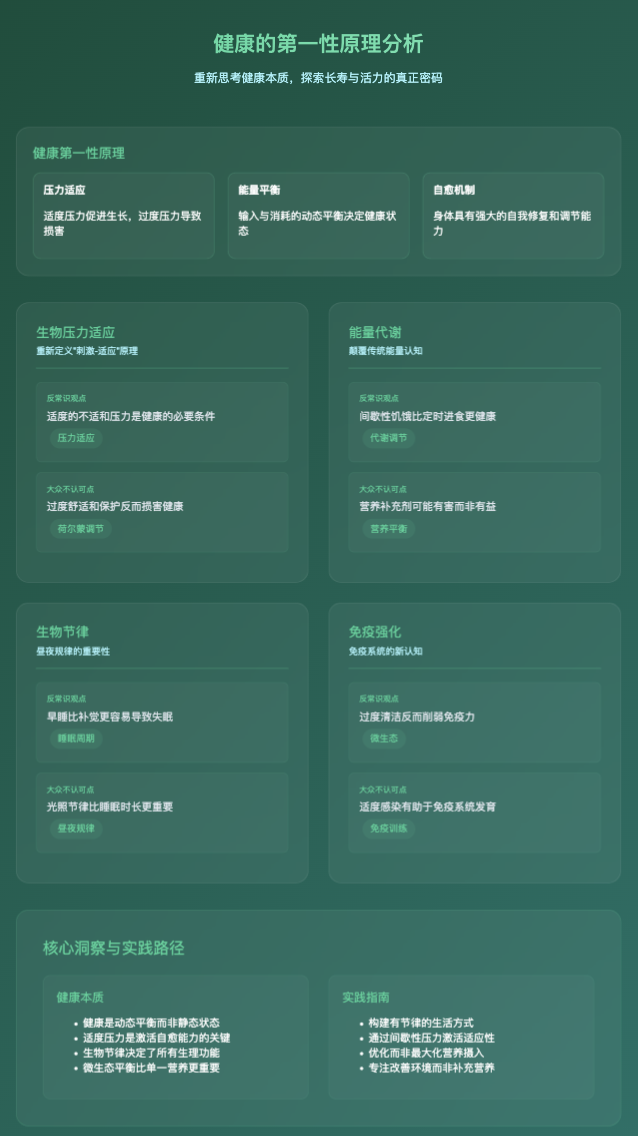
I love this line: “Mental models shape behavior—and ultimately, outcomes.”
AI’s overall intelligence roughly matches human average. Without advanced framing, its outputs tend to be competent but unremarkable.
Those “advanced frames” are distilled from humanity’s highest-order thinking—classic frameworks (e.g., inversion, second-order thinking) and foundational principles (e.g., Occam’s razor, probabilistic reasoning).
Even small shifts in prompting yield deeper insights:
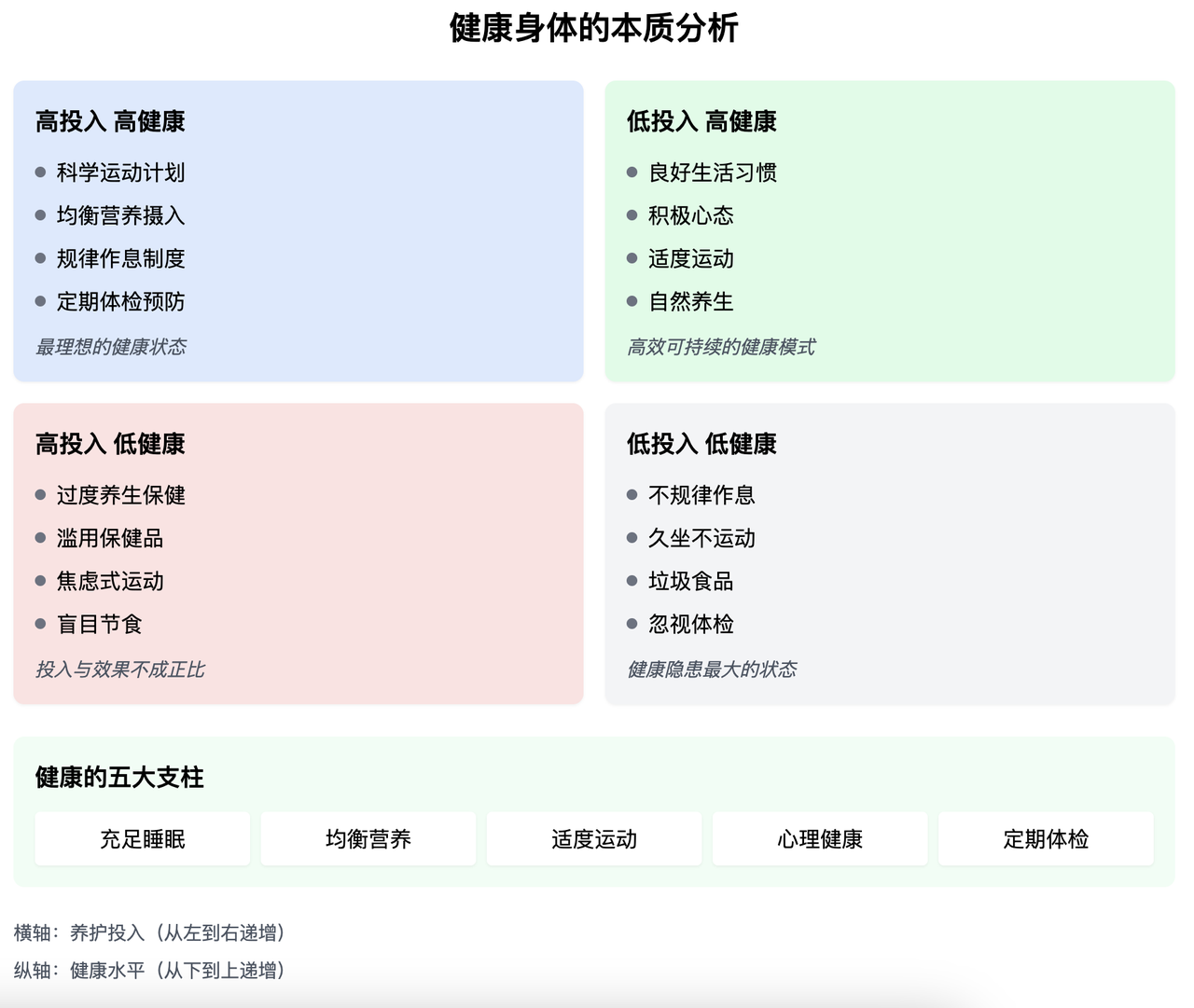
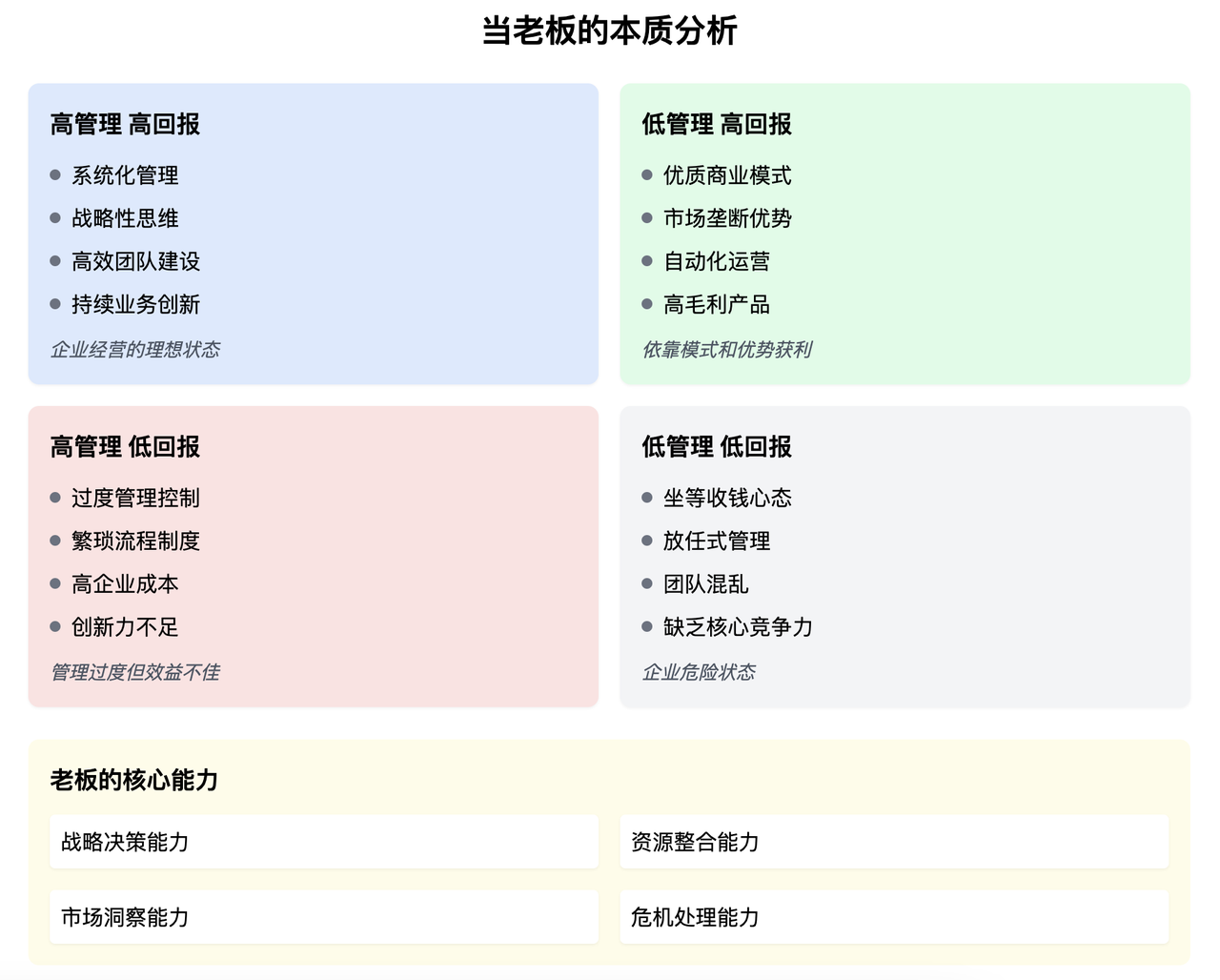
Mental frameworks act as filters—cutting through mediocrity to surface insight.
AI’s Capability Boundaries
Lately, I’ve been using AI intensively with friends—to think, write, and execute tasks.
We’re stress-testing its limits and hunting for higher-leverage ways to turn it into real productivity.
It’s genuinely fun.
Before using AI, people usually hold one of three expectations: high, low, or none at all.
After using it, outcomes typically fall into three buckets: exceeding expectations, falling short, or landing right where expected.
When AI exceeds expectations, it’s easy to mythologize it—assuming omnipotence. We overgeneralize: a single brilliant output becomes proof of universal mastery.
When it underperforms, we dismiss it entirely—“just another hype cycle.”
The real challenge? Defining what “good” even means.
My observation: most of us lack clear, concrete standards for judging AI output.
Even with humans—if someone delivers a report after a week of work, how do you objectively assess its quality? Often, judgment hinges on vague impressions or how convincingly they explain their process.
So setting an explicit expectation benchmark is critical—not just for using AI well, but for mapping its true boundaries.
A practical benchmark: “How would I tackle this task myself? What would my version look like—and how good would it realistically be?”
Two-Sided Market Effects
A strong business model = low input, high return.
Especially in niche markets with light competition, successful cold starts can generate self-reinforcing advantages—a kind of built-in moat.
The two-sided market effect is one such engine.
Lately, I’ve been rethinking knowledge-platform business models—and the two-sided principle keeps surfacing.
Its core benefit: as users grow on both sides, search and transaction costs drop sharply. Value scales exponentially with network size.
Another advantage? Even tiny niches can evolve into thriving two-sided markets.
Take NALA.ART: using AI, it matches painters with art collectors based on deep personalization. More artists → better data → smarter matches → more collectors → more artists. Today, it hosts over 8,000 artist-sellers.
Now imagine a knowledge platform where AI lowers content creation barriers and helps users discover precisely what they need.
More creators → richer content → more users → better data → sharper AI recommendations → higher engagement → stronger creator incentives…
That’s the two-sided flywheel—with AI as catalyst.
Think of MOOCs: once static course libraries, now full education ecosystems. Or Bilibili’s learning zone: from scattered UPloaders to a vibrant, self-sustaining study community.
The essence of two-sided markets isn’t just “two groups”—it’s finding the ignition point that triggers a virtuous loop. Build that loop, and the ecosystem begins turning itself.
Surprises from AI
Today, my friends and I used AI tools to complete work that would’ve taken months—applying “AI-first” rigorously to accelerate our own productivity.
The payoff? Rapid, visceral clarity about AI’s actual strengths—and its hard limits.
And yes—the surprises kept coming.
Especially while deeply testing recently released top-tier models.
A recurring feeling: Our IQs are getting thoroughly outclassed. It’s equal parts startling and exhilarating.
Many outputs blew past expectations.
This confirms something vital: new modes of production don’t just speed things up—they unlock previously impossible outcomes, at radically lower cost.
Every major tech wave opens a narrow 3–5 year window of opportunity. Most breakout companies from each wave launch within that span.
At such inflection points, only two types of players tend to thrive:
- Massive incumbents—backed by capital, talent, and institutional agility; or
- Tiny startups—operating with entirely different DNA, mental models, and entry points—capable of leapfrogging legacy constraints.
Rational People Aren’t Free
Rational thinking grounds judgment and decisions in strict logic: causality, analogy, deduction. It weighs trade-offs with internal consistency.
But over-reliance on rationality stifles creativity—and breeds behavioral rigidity. Why? Because analytical processing actively suppresses intuition.
So paradoxically, relinquishing some rational control is how we reclaim freedom.
True freedom lives in the dynamic balance between reason and instinct—making space for uncertainty, randomness, openness, and possibility-thinking.