Retirement Savings
In Lifespan: Why We Age—and Why We Don’t Have To, the authors write: “Strength training is like retirement savings. Just as we aim to accumulate enough money to sustain us in old age, we also need to build up reserves of muscle mass—and bone density—to protect ourselves from injury and stay capable of doing what we love.”
They liken increased muscle mass from resistance training to a form of long-term savings.
When we think about retirement, financial preparedness comes naturally—pensions, insurance, bank deposits. But physical preparedness? That rarely enters the picture. Yet health is a critical form of retirement capital.
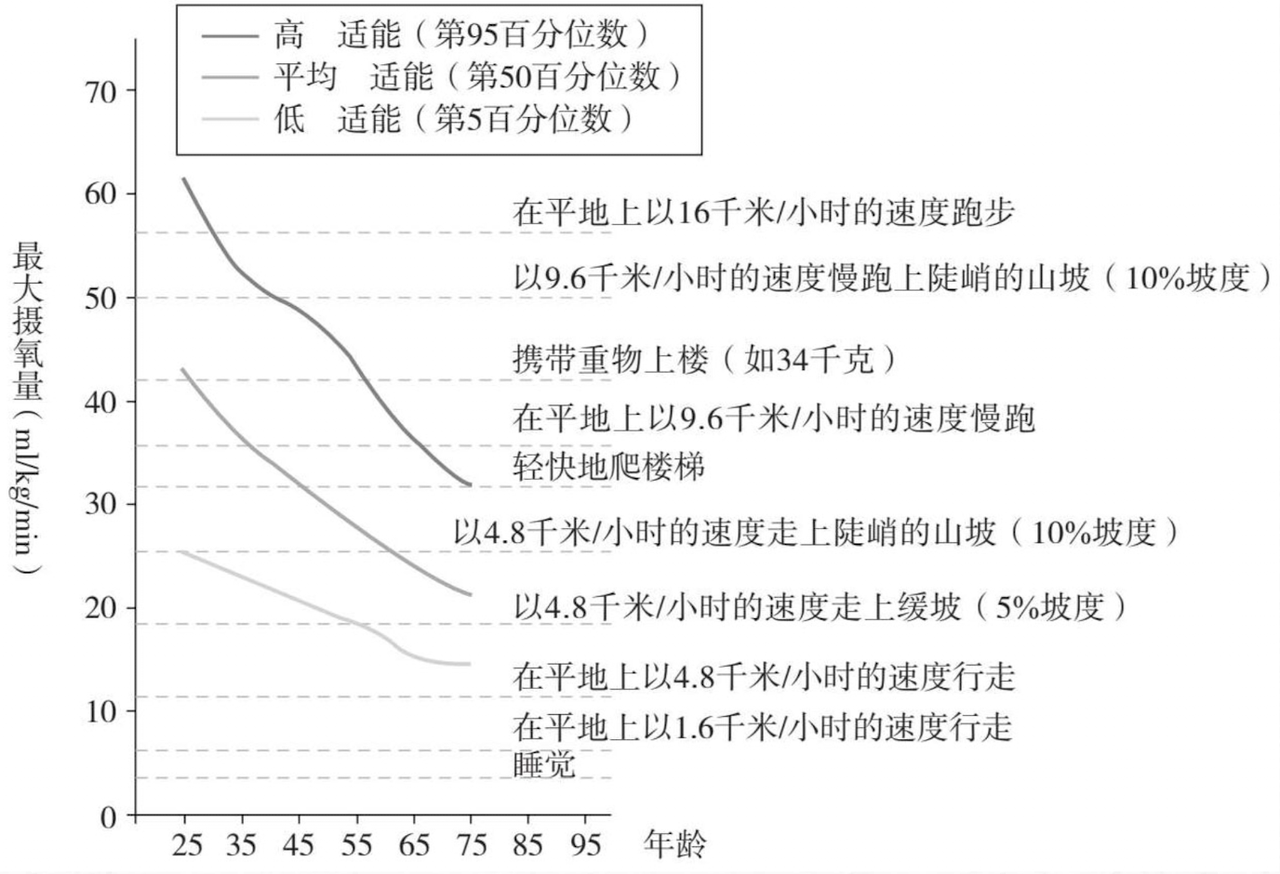
Human aging brings steady decline across multiple systems. Three stand out: aerobic efficiency, VO₂ max (maximum oxygen uptake), and muscular strength.
Take VO₂ max: it defines what you can and cannot do physically—even if you can’t yet feel its limits, seeing it visualized makes the concept click.
One Month Left in 2024
It hit me suddenly: just one month remains in 2024.
This year brought major shifts. After years of iteration and recalibration, I’ve officially closed my first entrepreneurial chapter—and stepped into a new professional phase. It’s a milestone worth marking.
The external turbulence and internal challenges I navigated over these years have been deeply formative. So I paused to reflect—and distilled three core takeaways: prioritize health, focus on AI-native products, and return to simplicity.
The Future Logic of Earning
Earning matters—but how you earn matters more.
For example: mastering compounding—not just in finance, but in skill, network, and output.
Going forward, the central question won’t be how many people you manage, but how much AI you can effectively direct.
In early industrial eras, scale meant headcount. With the internet, it meant servers, websites, or apps. Today, leverage isn’t measured in employees or digital assets—it’s measured in AI agents you train, orchestrate, and deploy to generate sustained value.
That shift is already here. Every business process, every product category, every service model deserves an AI-native redesign. That’s not hype—it’s the most concrete opportunity of our time.
Learning English
I asked a friend: “Your English improved so much—was it because you stuck with Duolingo streaks?”
He replied: “No—it’s because I had to use it at work.”
Practice, not passive repetition, is the engine.
He added: “There’s another method people overlook—one that works exceptionally well: shadowing.”
Example: pick a classic TV series, listen closely, and repeat each line aloud—word for word, rhythm for rhythm—until it sticks. Do this repeatedly, and you absorb not just vocabulary, but pronunciation, intonation, pacing, and natural phrasing.
The best productized version in China? English Dubbing Fun. I’ve also seen TikTok courses teaching kids English through Journey to the West adaptations—same principle, same effect.
This beats rote memorization by miles. And the pattern holds beyond language: find a strong model, imitate deliberately, apply flexibly, then master intuitively.
For someone like me—who once ranked among the English-challenged—this kind of efficiency is magnetic.
What Makes a Good Doctor
A great doctor balances three traits: IQ, knowledge, and EQ.
IQ means cognitive sharpness—the ability to spot subtle, high-signal clues in a complex case before others do.
Knowledge is medical depth and breadth: the hard-won, constantly updated foundation.
EQ is how you deliver truth. Same diagnosis. Same recommendation. A high-EQ doctor gets compliance; a low-EQ one gets resistance—even when technically perfect.
Doctors are human. These differences directly affect outcomes—especially in diagnosis. That’s why experienced patients seek second (or third) opinions: it dramatically lowers misdiagnosis risk.
Discipline and Success
We often see successful people and assume their discipline followed their success—as if they only tightened up after hitting goals.
But the reverse is true: discipline came first.
Zhang Yiming once said: “Half of life’s problems stem from lacking delayed gratification.” At its core, delayed gratification is about mastering human impulses—a lifelong practice. He calls himself a “moral top scholar”: no gaming, no mahjong, no movies. A textbook case of disciplined living.
To me, discipline means consistently maintaining healthy habits—movement, study, dialogue, reflection—and cultivating qualities like humility, patience, gratitude, diligence, and focus.
Of course, discipline alone doesn’t guarantee worldly success. Luck and strategic choice weigh heavily.
Yet discipline correlates strongly with sustaining success. Many lose wealth not from bad luck—but from undisciplined habits: overspending, impulsive decisions, emotional reactivity.
Because behind discipline lie quieter virtues: humility, calm, gratitude, effort, and focus.
A friend recently shared two insights in our group chat:
- “Live so you become a source of light.”
- “Study only knowledge that delivers core value to you.”
That’s discipline in motion—not as constraint, but as conscious self-direction.
Whether you’re still climbing or already arrived, discipline remains one of life’s highest-leverage practices. It lifts quality of life. It helps you shine. And it quietly prepares you—not just for success, but for keeping it.