Redefining “Fear”
I was chatting with a friend the other day and shared a recent “retreat” experience: spending several days alone in a house deep in the mountains. At night, silence fell so completely that, out of nowhere, childhood ghost stories surfaced—and with them, a sudden wave of tension.
But soon after, I settled into meditation—and began imagining those “ghosts” right there beside me: some sitting quietly, watching; others smiling gently; still others peering with quiet curiosity. In that moment, the “ghosts” transformed—not into threats, but companions sharing the same space.
That mental image—the “ghost”—was just fear arriving unannounced. And the way to meet it wasn’t to fight or flee, but to redefine the relationship: invite it in, sit with it, even welcome it as a guest.
Once I shifted how I related to the “ghost,” the fear simply dissolved.
In truth, most fear lives not in reality—but in imagination. It’s rarely grounded in fact, and even more rarely comes to pass. Excessive fear dulls presence, narrows attention, and erodes current experience.
So one surprisingly effective way to disarm fear is not to suppress it—but to redefine it.
Solar Power Project Models
A friend recently visited our office and shared what he’s been building in energy investment—fascinating work.
His model centers on installing photovoltaic (PV) systems on underutilized spaces—especially factory rooftops.
Take a large industrial plant with 100,000 m² of roof area: annual PV-generated electricity for industrial use can exceed ¥10 million. Upfront construction costs sit around ¥30 million—meaning payback in under three years.
For the factory owner? Near-zero capital outlay. They contribute only idle rooftop space—and in return, lock in permanent 20% electricity discounts. That alone saves ¥2–3 million per year.
But each such project demands heavy upfront investment—typically ¥20–30 million. Scaling organically is impossible if self-funded. So leverage is essential: structured financing to accelerate rollout.
After several years of iteration, he’s now operating a repeatable model: for high-quality projects, his team invests only ~20% of total capital—the rest comes from external financing.
What makes a project “high-quality”? Strong solar irradiance, large stable facility footprint, consistent operational history—and critically, low perceived risk after rigorous site assessment.
Because of these attributes—stability, alignment with national carbon neutrality goals, predictable ROI, tangible asset backing—state-backed funds are eager to participate. Private and individual investors, by contrast, are largely tapped out.
This gives him strong negotiating ground: he speaks confidently from the investor’s perspective, guaranteeing both capital safety and steady returns.
Two School-Based Monetization Models
Recently, through user conversations, I heard about two distinct revenue models for entering K–12 schools in China:
Model 1: Tool Subscription Fee from Parents
Parents pay ¥24/year—just ¥2/month—for access to a digital teaching tool.
The fee is negligible: teachers report zero complaints. For educators, adoption brings tangible perks—e.g., mobile top-ups per class using the tool.
Individually small, yes—but at scale, it adds up fast. With our current user base, this single stream could generate over ¥100 million annually.
Model 2: Direct Course Fees from Parents
An A-share listed company offers pre-recorded smart courses, delivered via school partnerships. Parents pay monthly per subject—and may enroll in multiple subjects.
Teachers introduce the courses and post sign-up “relay lists” (a group chat feature where parents tap to join). Crucially, enrollment isn’t mandatory—but the social pressure is real.
One parent told me: “I didn’t want to sign up—but when I saw everyone else had, I felt I had no choice.” In his high school, nearly all families enrolled.
At ¥5,000–¥8,000/year per family across ~2,000 students, that’s roughly ¥10 million in annual revenue.
Marketing People Fighting on Two Fronts
Doing marketing well—truly well—is hard.
Within any organization, marketing stands apart from most functions: internally, you’re constantly negotiating (or “fighting”) with colleagues; externally, you’re competing head-on with rivals.
Most roles—even sales—focus primarily on internal resources and internal competition. Marketing must juggle both internal alignment and external dynamics: market shifts, competitor moves, channel volatility, brand perception.
That duality wears people down—especially when external pressures mount and internal stakeholders lack empathy or context. Senior marketers feel this acutely.
Yet precisely because of this dual pressure, marketing leaders gain unusually rich, multidimensional experience—making the role a powerful crucible for growth.
The Principle of Reciprocity
A truly fair contract rests on one foundational idea: reciprocity.
In practice, though, fairness emerges only when parties hold relatively equal bargaining power. When one side dominates—say, a large enterprise imposing terms on a small vendor—the agreement skews heavily. Flip the dynamic, and clauses shift accordingly.
Still, once signed, most commercial agreements reflect some balance—even if imperfect. Outlandish terms rarely survive negotiation.
Reciprocal, balanced agreements are a hallmark of mature markets.
The same principle applies to relationships.
In my view, emotionally healthy, sustainable relationships require reciprocity—not as rigid scorekeeping, but as mutual respect, shared effort, and aligned expectations. That’s maturity in action.
Without it? Relationships may ignite quickly—but they burn out just as fast. Unbalanced, irrational dynamics lack resilience. One misstep—and they shatter.
The core question isn’t “Is this exciting?” but “Is this built to last?”
An AI-Powered, Traffic-Driven Tool Site
I came across a striking example: a dead-simple unit-conversion website—[cm-to.com](https://cm-to.com).
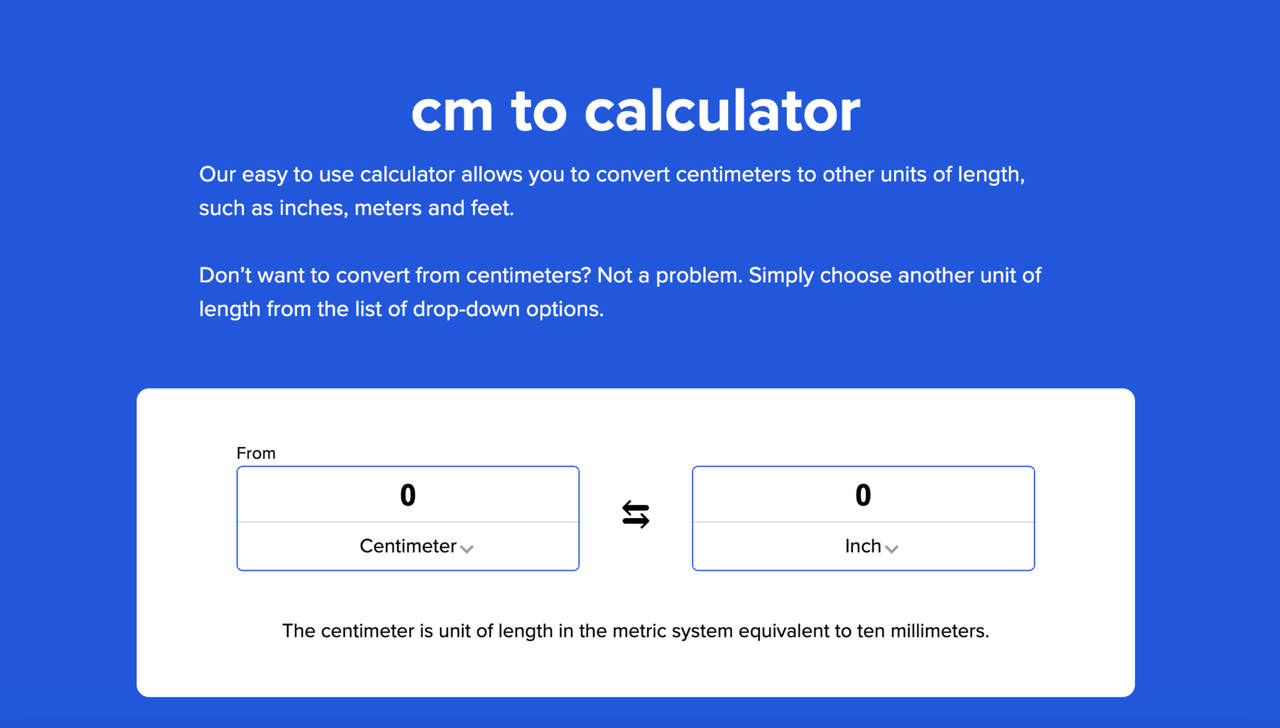
Its users search for phrases like:
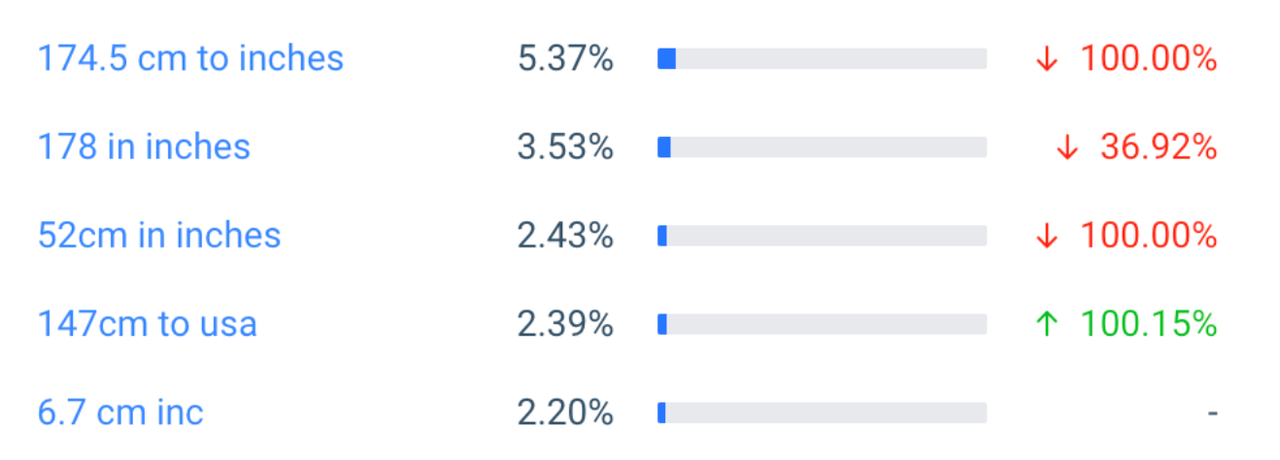
Over the past month, cm-to.com’s traffic surged dozens of times.

Why? Because the site uses AI to generate massive volumes of highly targeted, SEO-optimized content—pages that Google readily indexes and ranks.
Take this example: cm-to.com/28-cm-to-inches
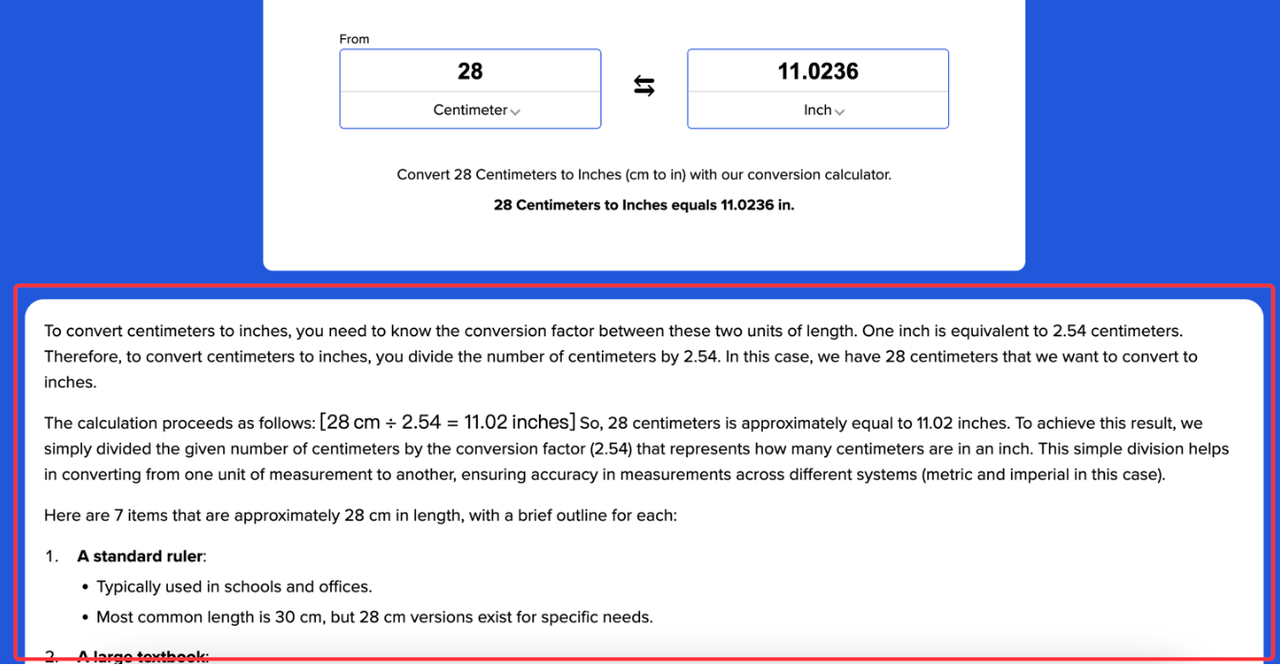
The content is the engine. AI generates thousands of precise, semantically rich pages—each targeting a unique conversion query (e.g., “37 cm to inches”, “152 cm to feet”). Quantity + relevance = visibility. And visibility drives traffic—automatically, scalably, sustainably.