The Core Is the Capacity to Love
Thinking of my father, the overall feeling is warmth.
It shows up in several ways:
- He never gave me negative evaluations or imposed expectations. When I did well, I was his pride; when I stumbled, he offered no blame. As a child, our longest conversations were him telling tall tales—I never felt lectured.
- When I needed support, he stepped in fully. When I didn’t, he gave me space—no overreach, no unnecessary intrusion.
That’s it: unconditional love. Its essence is respecting your autonomy as a distinct person while standing ready to support you—without strings, without conditions.
So when I recall him, warmth remains—not because every detail was perfect, but because the feeling itself was whole and sustaining.
Yet this is only my perspective. To others, he might have seemed naive—easily swindled. To my mother, perhaps “unsuccessful”: financially insecure, indecisive, lacking backbone. How someone “is” depends entirely on who’s doing the perceiving. There is no single objective version—only layered, subjective experiences.
Two Weeks of Tinnitus
Two weeks ago, I suddenly developed tinnitus and noticeable hearing loss in my right ear. A hospital visit confirmed a perforated eardrum—surgery is required to repair it. Without intervention, hearing will steadily decline with age.
What surprised me most wasn’t the diagnosis—but how I lived with the tinnitus. Imagine a monotonous, loud, unchanging tone blaring in your ear, nonstop, for fourteen days. Four years ago, I’d likely have spiraled: anxiety, insomnia, obsessive Googling, helplessness.
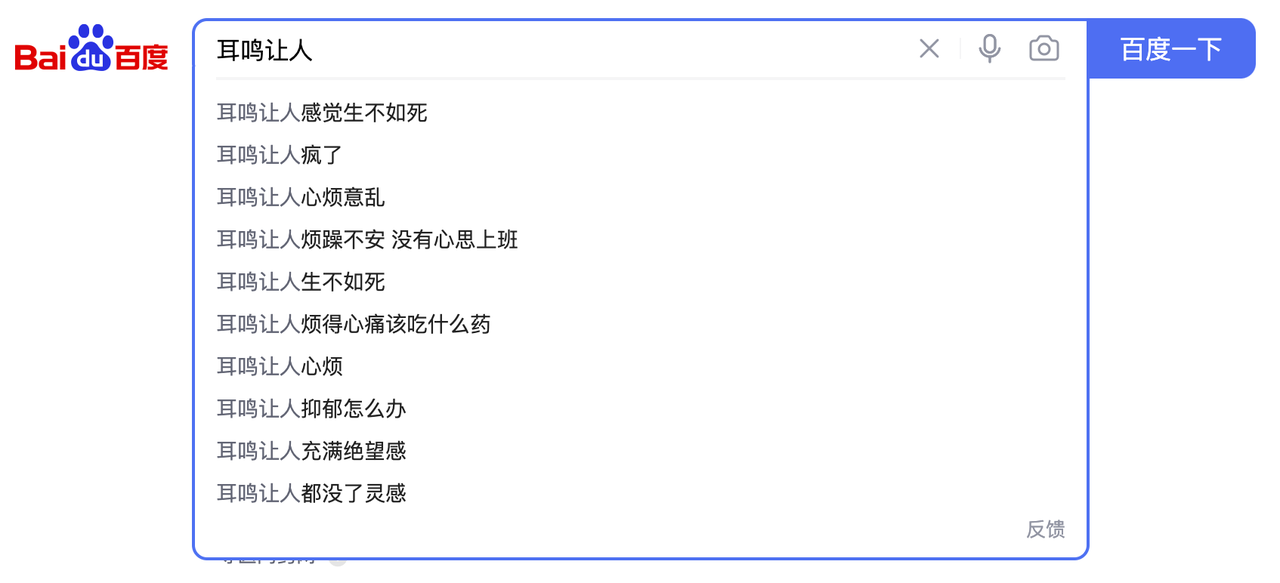
This time? No panic. No inner commentary. No labeling it “bad” or “unfair.” It simply is. And it may stay.
I credit this shift to a quiet internal change: I’ve steadily softened my habit of judging experience through personal preference. I’m learning to recognize a quieter presence—the “true self”—which observes events with calm objectivity. It doesn’t assign good/bad. It registers what is, and lets it be.
Dropping Demands
Lately, I’ve grown convinced: one of the simplest paths to greater happiness is to stop demanding things from others.
There are two layers to this:
First, redirect attention inward. Focus on yourself: your growth, your integrity, your effort. Let your evolving self radiate positive influence—not through instruction, but through quiet example. Influence and demand operate on entirely different frequencies.
Second, understand why we demand in the first place: it’s a bid for control—a deep-seated human reflex. Yet most ruptures in close relationships stem not from lack of love, but from excessive demands. Here’s the hard truth: Any demand invites disappointment. Any disappointment fuels conflict. So what’s the alternative? Flip the script: Demand more from strangers—and ask nothing of those closest to you.
We hesitate to ask hotel staff for extra towels or restaurant servers to reheat a dish—not out of kindness, but discomfort. We call it “not wanting to trouble them.” But that hesitation gets displaced onto partners, friends, family. Meanwhile, premium hotels price services into their rates. Not asking means paying full price for under-delivery—and straining your nearest relationships instead.
Training Willpower
- Willpower’s greatest gift is enabling sustained focus and effort—especially on challenging, meaningful tasks.
- But willpower depletes. Like water in a lake, it needs replenishment—not just withdrawal.
- Challenging work, long-term projects, and internal friction (e.g., rumination, self-criticism, arguments) all drain it. That’s why after a heated exchange, deep work feels impossible: your willpower reserves are spent. So minimize all avoidable friction—and reserve willpower for what truly matters.
- Assign it deliberately: invest your strongest mental energy in your most important task of the day.
- Turn high-value, initially difficult actions into habits. Habituation reduces reliance on willpower—making consistency effortless.
- Willpower is like muscle: train it, and it grows stronger, steadier, more enduring—expanding your capacity for deep, demanding work.
- How to train it? Do small, slightly uncomfortable things daily—and move your body regularly.
Responding to Negative Feedback
When faced with demands or criticism, most people default to one of three reactions:
- Explain, argue back, or accept passively.
- Reject outright—ignore, mute, block.
- Observe neutrally—and introduce a new frame.
The first option—engaging directly with the content—usually backfires. It reinforces the other person’s impulse to evaluate or control you. It also entrenches their negative lens.
So at minimum: refuse or ignore.
Many cloak criticism in concern: “I’m saying this because I care.” But real care doesn’t erase your strengths. If someone truly had your well-being in mind, wouldn’t they notice—and name—what’s already working?
The hidden drive behind unsolicited criticism is rarely compassion. It’s a craving for external control. Genuine love focuses on what uplifts you—not what diminishes you.
And if you want greater strength and joy? Stop criticizing others—unless you choose to, consciously, for your own uplift. There’s a world of difference between intentional, joyful critique and unconscious, habitual fault-finding.
The Time Machine Theory of Business Opportunity
Cultures and technologies evolve at wildly different paces. Step into certain places, and you feel like you’ve landed in the future—or slipped back into the past.
That gap is the opportunity.
Take a proven model from an advanced context and transplant it where it’s still novel. Example: China’s online education infrastructure and pedagogy is globally leading. Replicating its architecture elsewhere—adapted, not copied—can yield outsized impact.
Three Capacities Every Adult Must Cultivate
- Earning power: Ethical, intelligent wealth creation—financial literacy as life literacy.
- Focus: Presence in the moment—cultivated through practice, not theory.
- Loving capacity: Unconditional love—not transactional, not coercive, not fear-based. Love as steadfast presence.
Every Tool Deserves an AI Rewrite
A former colleague from my online school days visited recently. His takeaway from the AI boom? Every existing tool deserves to be rebuilt with AI at its core.
Why? Because AI doesn’t just incrementally improve efficiency—it transforms the cost, speed, and depth of content creation, analysis, and delivery.
How to spot tools ripe for reinvention? Skip user surveys. Go to WeChat’s official account rankings. In any category, ~1/3 of the top 100 accounts promote tools. Pick the highest-traffic ones. Study them. Then reimagine—not just replicate—with AI-native logic.
Focus Only on What You Control
In Martin Seligman’s Authentic Happiness, he identifies three sources of well-being: genes, environment, and what you can control. His research shows the third source dwarfs the first two in impact.
So if you seek lasting happiness: direct your energy toward what’s yours to shape.
But beware: seeking control over others—through demands, judgment, or manipulation—is a trap. It drains joy. External reality resists control. The only domain you truly govern is yourself.
Invest there: your growth, your character, your work, your attention to important-but-not-urgent matters. That’s where real agency lives.
And practice refusal: say no to unreasonable requests. Disengage from toxic feedback—even from superiors. Shielding yourself from external PUA isn’t selfish. It’s the first, essential step toward sustainable well-being.
Advice from a College Entrance Exam Expert (for My Niece, Starting Grade 12)
My niece is entering her final year of high school. This week, she visited Beijing and met with an outstanding Gaokao (China’s national college entrance exam) coach. Below are key takeaways:
Building Confidence & Mindset
- Confidence isn’t optional—it’s priority #1. Cultivate it deliberately—even “blind” confidence.
- If you can’t solve a problem, assume: “I don’t know it yet—but neither do most others.” Strategically dismiss its weight; tactically master it.
- If you bomb a mock exam, tell yourself: “Others bombed worse.”
- Affirm daily: “I’m capable of Peking or Tsinghua.” Landing at a 985 university? Just a minor slip.
- Prioritize rest. Don’t burn out your body.
- Immediately reject or mute all negative input—block critics, silence doubters.
- Don’t fear “bothering” teachers. They exist to serve your exam success. Use them relentlessly. This is your most consequential test—why wait until after?
Boosting Math Scores (120 → 140)
- Exam structure: 70% foundational, 20% mid-difficulty, 10% elite. Hitting 120 means foundations are solid—but you’re hitting a ceiling.
- Two main bottlenecks: losing “easy” points (carelessness, shaky concepts) and over-investing time in the hardest 10%.
- Strategy: Sacrifice selectively. Skip the last multiple-choice, last fill-in-the-blank, and last full-solution question unless you see a clear path within 15 seconds. Pour energy into the first 90%—aim for 100% accuracy there. That’s ~135 points. Then grab 5 more from the elite tier. Done.
- Find one classic paper. Analyze every error—root cause, not symptom. Master it. Then retake the same paper. Score ≥140. Repeat.
Maximizing Study Efficiency
- Only solve high-quality problems. Quality hierarchy: provincial exams > district joint exams > school-level exams. Skip low-yield school tests—blame poor question design, not your skill.
- Every pre-Gaokao test exists for one purpose: expose gaps. Celebrate errors—they’re your roadmap. Then drill related real exam questions.
- Avoid random simulation papers. Most are noise. Anchor in real past papers.
- Simulate real conditions: timed, handwritten, no distractions. Ensure identical errors never recur.
- Exams reward understanding + fluency. Fluency—speed, accuracy, instinct—wins. Fewer mistakes = higher score.
Raising Chinese Language Scores
- At ~120/150, don’t over-invest here. Redirect energy to weaker subjects.
- Biggest ROI? Essay writing (45 → 50–55). Remember: your grader is both reader and judge, with ~15 seconds per essay. Your goal: delight them instantly.
- Title matters: Borrow strong, evocative titles—like ad copy. First impression = bonus points.
- Opening & closing: Craft them meticulously. First sentence of each paragraph sets tone.
- Handwriting: Clear, legible, consistent. No flourishes—just readability.
- Core principle: Make the grader happy. Their pleasure is your score.
Life Planning Beyond the Exam
- The Gaokao is a gateway—not the destination. It shapes your peer network, which shapes your trajectory.
- Prioritize: Top-tier university > Major city > Specific major.
- Why? In big-city cafés, conversations revolve around startups, careers, ideas—not gossip. Environment molds mindset.
- Visit diverse places—especially top-tier universities. Exposure breeds options.
- Consider STEM schools: higher male-to-female ratios, grounded culture, organic relationship-building (far more reliable than dating apps or matchmakers).
- Choose a university that treats students as people—not revenue units. That distinction defines your entire experience.