Why Turing Matters
Alan Turing stands among the most influential scientists of the 20th century—the founding father of computer science. He mathematically defined computation itself, cracked Nazi Enigma ciphers during WWII, and laid the conceptual groundwork for the digital age.
What set him apart wasn’t just brilliance—it was his mathematical gaze: seeing intelligence and calculation not as mysterious phenomena, but as formal, abstract systems open to rigorous analysis.
His impact spanned disciplines—computer science, cryptography, artificial intelligence, mathematical biology—each marked by foundational contributions. Such rare, cross-domain mastery offers more than historical interest; it gives us a living template for growth, work, and organization.
1. Mastery Through Extremes
Doing something at 90% versus 99% isn’t a 10% effort gap—it’s often a 10× difference in time, focus, energy, and method refinement.
Take marathon running: finishing in under 4 hours is commendable for most; breaking 3 hours demands elite dedication. Turing’s personal best? 2 hours, 46 minutes—in the 1940s. He trained relentlessly, not for fame, but because the process of extreme pursuit forged resilience itself.
Overcoming repeated, meaningful difficulty builds a transferable muscle: the ability to face any challenge with calm competence. That’s why I encourage everyone—adults and children alike—to aim for national-top-tier mastery in at least one domain. The payoff isn’t just skill—it’s character.
2. Raw Intelligence—But Not Enough
Yes, Turing was extraordinarily intelligent. But raw IQ alone doesn’t scale. What matters more is how you use your mind over time. Intelligence without renewal stagnates. Lifelong learning—curious, disciplined, applied—is what turns potential into lasting impact.
3. Learning from Masters
Turing’s thinking on computation was deeply shaped by David Hilbert’s formalist program and John von Neumann’s architectural insights. Great work rarely emerges in isolation. It’s built on dialogue—with ideas, with predecessors, with peers.
Seeking inspiration from true masters—and surrounding yourself with people who think rigorously—isn’t imitation. It’s acceleration.
4. “One Understanding, Hundred Applications”—But Only After Depth
“Cross-disciplinary fluency” sounds appealing—until you realize it only works after deep expertise. You don’t “connect dots” if you’ve only sketched half of them. Real cognitive transfer requires mastering a field’s underlying logic, its assumptions, its failure modes—then recognizing structural parallels elsewhere.
Superficial dabbling across domains produces surface-level “insights.” True synthesis begins with depth.
5. Lifelong Learning as the Ultimate Lever
As Malcolm Gladwell notes in Outliers, once IQ hits ~120, further gains offer diminishing returns. What separates those who go far from those who plateau isn’t starting point—it’s continuity. A person of average intellect who learns daily, reflects weekly, and applies monthly will outpace a gifted but static peer—every time.
6. Goals That Stretch Reality
In a recent talk at Wuhan University, Lei Jun urged students to set goals an order of magnitude higher than their peers’. High targets do three things: ignite motivation, sharpen focus, and reframe obstacles as necessary steps—not barriers. Break that audacious goal down, and each sub-goal becomes manageable. Achieve even one, and you’ve already outpaced most.
7. Staying Hands-On
No matter how senior, how celebrated, Turing remained immersed in the work—designing machines, writing algorithms, running experiments. So do today’s world-class engineers: Jeff Dean (Google Fellow, NAE member) still writes production code. Leadership isn’t about delegation away from complexity—it’s about staying close enough to the front lines to recognize what really matters.
8. Integrity as Infrastructure
He kept promises. He delivered. He earned trust—not through charisma, but consistency. In any team or organization, reliability compounds. It lowers coordination cost, accelerates feedback loops, and makes collaboration possible.
In Summary: Three Foundational Pillars
- Growth Mindset: Combine relentless pursuit of excellence with audacious goals—not to check boxes, but to expand your capacity.
- Learning Methodology: Fuse continuous learning with real-world application. Intelligence opens doors; disciplined practice walks you through them.
- Professional Discipline: Master one domain deeply before reaching across. “One understanding, hundred applications” only holds when the “one” is real—not rhetorical.
Recent Reflections on AI
AI progress remains dizzying. ChatGPT-4o, for example, can now generate or edit images from simple prompts—even exceeding expectations in quality and coherence.
This tempts some to ask: Do we still need prompt engineering? Do we still need to learn AI?
My conclusion—shared with Xiangyang—is the opposite. For routine tasks, AI has lowered the bar: basic image generation, summarization, or drafting now requires less finesse. But for advanced or mission-critical work—say, aligning AI output with nuanced brand voice, legal compliance, or strategic storytelling—the bar has risen sharply.
Think of it like racing: The Xiaomi SU7 Ultra simplifies controls so almost anyone can drive it around a track. But to win? You still need pro-level reflexes, strategy, and thousands of hours of practice.
Or consider PowerPoint: When few knew how to build slides, basic competence stood out. Today, templates and tools are ubiquitous—but expectations have soared. The real PPT master isn’t the one stacking animations; they’re the logic architect, the visual philosopher, the narrative strategist. Their “tricks” are invisible—because they serve clarity, not decoration.
So it is with AI. The top-tier prompt engineer doesn’t obsess over syntax. They bring deep domain knowledge, sharp logic, and refined aesthetic judgment. When I see stunning images generated by 4o, the prompt behind them still reveals what the creator saw in the image before it existed—their taste, their intent, their understanding of light, composition, mood.
That’s not technique. That’s craft.
The Logic of High Human Effectiveness in the AI Era
Success = Strategy × Effective Execution
(Strategy = What to do + What *not to do)*
High Human Effectiveness = Effective Execution × AI Automation
- Effective Execution = [0 → 1] (Your baseline capability—clarity, discipline, judgment)
- AI Automation = [1 → 100] (How well you integrate AI into your workflow—not just using it, but *orchestrating it)*
Example:
- Person A: Execution = 0.5, AI Integration = 50 → Effectiveness Index = 25
- Person B: Execution = 0.8, AI Integration = 50 → Effectiveness Index = 40
Even with identical AI tools, execution quality dominates outcomes.
Getting Things Done = Will × Karma × Skill × Context
- Will: Inner drive—the “why” that sustains effort
- Karma: Accumulated capital—experience, reputation, trust
- Skill: Concrete abilities needed to execute
- Context: External conditions—timing, tools, support, luck
AI Project Success = AI Operations × AI Technology
- Operations = [0, 1] (Clarity of use case, stakeholder alignment, iterative testing)
- Technology = [1, 100] (Model choice, fine-tuning, evaluation rigor, infrastructure)
Most teams over-index on technology. The bottleneck is almost always operations.
What Really Extends Lifespan?
It’s not happiness. Not comfort. Not even health habits alone.
It’s meaning.
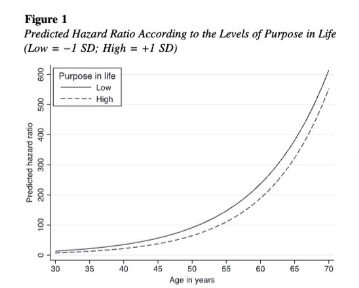
A landmark Finnish study tracked 6,000 U.S. middle-aged adults for 23 years. The strongest predictor of longevity? A sustained sense of purpose—knowing why you wake up, what you’re here to contribute.
Viktor Frankl observed the same in Nazi concentration camps: those who held onto meaning—even in extremis—survived longer. Why?
- Physiologically, purpose triggers sustained release of anti-inflammatory, immune-enhancing hormones (e.g., oxytocin, DHEA). Pleasure gives fleeting dopamine spikes; purpose delivers steady, systemic resilience.
- Psychologically, meaning buffers stress. Setbacks become data points—not identity threats—when viewed through a larger mission.
- Behaviorally, purposeful people invest in health because they need their bodies to fulfill their mission. It creates a self-reinforcing loop: purpose → care → vitality → greater capacity to serve.
Happiness is a state. Meaning is a compass.
Starting With WHY
Lately, I’ve been designing a project: Solve 100 Real Problems with AI.
A friend asked: “What’s the core idea?”
I replied: “It starts with why—not how.”
Too many treat AI like a hammer, then scour the world for nails. Better to begin with the nail: the unmet need, the friction point, the human pain. Then choose—or build—the right tool.
Scroll through AI-focused social feeds, and you’ll mostly find WHAT (new features) and HOW (tutorials, benchmarks). Rarely do you see deep WHY: Why does this problem matter? Why does this solution fit this context? Why not another tool—or no tool at all?
Finding real AI use cases is hard—for three reasons:
- It’s genuinely difficult: Spotting authentic business needs requires listening beyond surface requests—into workflows, bottlenecks, and silent frustrations.
- It’s nontrivial to solve: Take AI-powered resume screening. The real challenge isn’t prompting—it’s codifying what “good fit” actually means for a given role, culture, and growth stage. Most can’t articulate that clearly.
- It’s energy-intensive: Even when AI writes 95% of the code, iterating an AI-augmented interview system still demands design judgment, edge-case testing, and user feedback loops.
Yet the reward is profound. If we can distill this practice into a replicable methodology—a field manual for applied AI reasoning—it becomes more than a project. It becomes infrastructure for others’ success.
On Thursday, I shared the idea with Xiangyang: 100 days, 1 problem per day, solved with AI. He loved it. And if we pull it off? Our second book—and companion practice course—won’t be a stretch. It’ll be inevitable.