What Makes a Great Team?
A friend who’s played in bands for over 20 years shared his take on great teams:
- He’s always worked in tight 3–4-person units. When the people click, the output far exceeds the sum of individual abilities.
- Working solo isn’t just prone to interruption—it often breeds conservatism.
- The “freelance” model—jumping between collaborators or projects—is common, but tends toward mediocrity. After years of that, many lose sight of what they truly want to do.
- In contrast, stable bands develop a collective identity. Members stay fixed; over time, they fuse into something new—a unit with its own voice, rhythm, and style.
My takeaway: Sustained co-creation builds rare, low-friction mòqì—a Chinese term for unspoken, intuitive alignment. With minimal internal friction, space opens up for bold ideas and genuine innovation.
I heard a similar point while listening to an audiobook: The era of the lone genius is over. Einstein could work alone—but over the past two decades, papers co-authored by teams consistently outperform solo work. Today’s most impactful patents are almost exclusively team-born. You don’t just need a team—you need the right team.
The key? Assemble not just any group, but a cohort of world-class individuals—each a top-tier expert in their domain, and each complementary to the others.
That’s where real team leverage lives. Its benefits include:
- A stable, elite team delivers “1 + 1 > 3” outcomes—not just additive, but multiplicative.
- Long-term alignment dramatically boosts both execution speed and creative output.
- Consistent collaboration helps crystallize a distinctive style and durable competitive edge.
I recently met another new friend who applies this same filter when choosing co-founders: he seeks only the absolute best practitioners in their fields. “It’s not about headcount,” he says. “It’s about finding the strongest, most complementary experts—and making it interesting.”
On o3
On the final day of OpenAI’s December 2024 developer event, they unveiled o3—their latest flagship model.
Here’s how it stacks up:
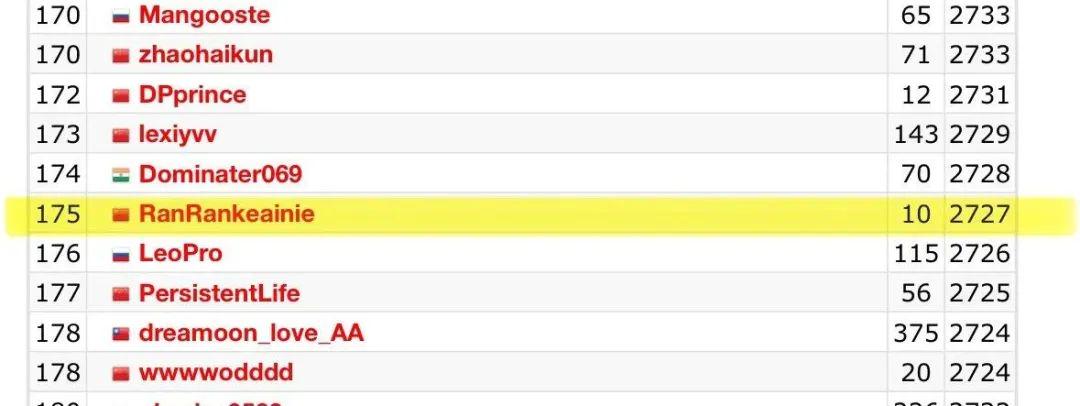
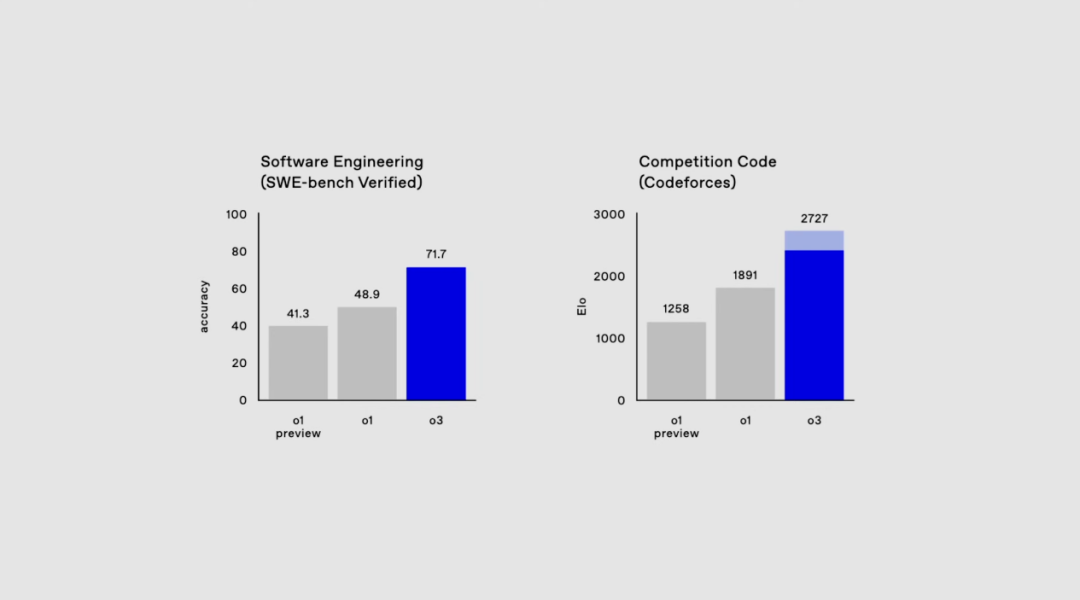
- In Codeforces—a global competitive programming platform—o3 ranked 175th out of 168,076 participants, beating 99.9% of human coders. Its score: 2727.
- On SWE-Bench—a benchmark for real-world software engineering tasks—o3 achieves 71.7% pass rate, up sharply from o1-preview’s 41.3%. That means o3 correctly solves ~70% of realistic coding tasks end-to-end, including passing unit tests. Only ~30% now require human intervention—and even there, o3 accelerates human developers significantly.
- On AIME 2024 (a top U.S. math olympiad exam), o3 scored 96.7%—missing just one problem.
- On GPQA Diamond (a PhD-level science reasoning test), o3 outperforms o1 by 10 percentage points—and o1 already matches the average human PhD candidate.
- On ARC-AGI (a rigorous abstract reasoning benchmark), fine-tuned o3 hits 87.5%, surpassing the human average (85%).
In coding, math, logic, and scientific reasoning, o3’s cognitive performance now exceeds that of most humans.
For non-technical founders or general professionals, o3’s arrival matters deeply—not as a replacement, but as a high-fidelity thinking partner. It can surface insights, clarify assumptions, and untangle logic-heavy problems at near-expert level.
And while you no longer need to write code to ship software, AI still doesn’t replace engineering judgment: architecture trade-offs, user empathy, long-term maintainability, and contextual design remain deeply human. That’s where our value lies.
What’s harder—and more urgent—is cultivating the habit of reaching for AI first when tackling real-world problems. Building that reflex is the real bottleneck.
Learning from the Best
I watched an interview with several Claude engineers on prompt engineering—and was immediately struck by its clarity and depth. I rewatched it twice, then sent it to a friend. We agreed: it’s the single best practical resource on the topic we’ve seen.
What made it exceptional wasn’t jargon or novelty—it was precision. They cut straight to the core mechanics, stripping away noise to reveal first principles.
That’s a hallmark of top-tier thinkers: they compress complexity into essence.
For learning, the most critical choice isn’t what to study—it’s who to learn from.
If your inputs are mediocre, your outputs will be too. So treat sourcing like strategy: go straight to the source.
To enter a new field, follow this sequence:
- Identify the field’s most influential practitioners.
- Find their original talks, essays, or code—not summaries or secondhand takes.
- Study not just what they say, but how they think: their framing, assumptions, and mental models.
- Digest systematically—not passively, but by reconstructing, questioning, and connecting.
- Integrate into your own knowledge architecture—so it becomes usable, not just stored.
Three key filters for high-signal learning:
- Source-first thinking: Prioritize direct access to pioneers—not interpreters.
- Essence over elaboration: The best content distills complexity into actionable insight—not just more detail.
- Quality > quantity: One hour with a world-class mind beats ten hours of diluted content.
- Active synthesis: Like my friend did—he translated, summarized, and structured the interview into a polished doc: Deep Dive: AI Prompt Engineering
The Path-Dependence Principle
Over drinks with two friends, one asked: “Given our current plan, is there actually a better option?”
I paused—and replied: The “best” option isn’t some distant ideal. It’s the intersection of four conditions:
✅ What you’re genuinely good at
✅ What you truly enjoy
✅ What the market needs now
✅ What has credible growth potential
That overlap is your highest-leverage starting point.
More broadly, the optimal strategy for any project or pivot is roughly 70% path dependence + 30% intentional novelty.
Too little continuity—pure reinvention—and you risk heroic failure. Too much inertia—zero novelty—and you stagnate.
This mirrors effective learning: peak retention happens when ~70% of new material builds on known foundations, and ~30% stretches you.
Same logic applies in the AI era: Every existing workflow deserves an AI-native rewrite.
The legacy process is your 70%. AI’s capabilities—the new reasoning layer, automation, or augmentation—are your 30%.
In some domains, that ratio flips: 50/50, even 70/30. That’s how you build authentic AI fluency.
Learning from Brilliant Young Minds
I hosted dinner for two AI “rock stars”: my co-founder and a newly met Tsinghua graduate.
He’d interned at OpenAI, co-founded an AI startup, and reached out after reading my Feishu docs. Turns out he and my co-founder already knew each other well—so we turned coffee into dinner.
What stands out about bright young people isn’t just raw intellect—it’s how they channel it:
- He reads 4–5 AI research papers every week.
- His grasp of complex tooling (e.g., inference optimization, eval frameworks) is unusually deep.
- He speaks about building with infectious energy—and maintains disciplined, daily learning habits.
His WeChat intro floored me: “Building a company that disrupts ByteDance.”
In today’s cautious climate, that kind of ambition is rare—and refreshing.
Even better: the tool he’s building solves a problem I’ve been hunting for months. After seeing his demo, I insisted: “Ship me the API now. I’m testing it tomorrow.”
We’re back in an era where audacity and execution aren’t mutually exclusive—where big ideas meet sharp execution.
Principles Work
Sound principles do shape growth—and resilience.
Yes, “I’ve heard all the advice but still struggle” is common. But the real gap isn’t hearing—it’s internalizing. A principle only works once it reshapes your cognition.
There’s empirical proof: In one study, two groups of students took the same exam. One group received a 10-minute briefing on test-taking psychology beforehand. Their average score? 70 points higher.
Why? Because stress isn’t just emotion—it’s biology. Our genes wire us to respond to threat with anxiety and cortisol: a survival mechanism honed over millennia to face predators or famine.
But modern stressors—deadlines, uncertainty, feedback—don’t require fight-or-flight. So we can retrain our response.
Each challenge is a chance—not just to solve a problem, but to upgrade your operating system. Reframe pressure as practice. That’s where real growth begins.