Two Kinds of Opportunity
This week, I attended Souwai’s annual summit and listened to talks from many fellow entrepreneurs—inspiring, nostalgic, and full of familiar faces.
In the PC era, search engines like Baidu were the internet’s primary traffic gateways. SEO was central to capturing that search traffic.
Souwai is China’s largest and longest-running SEO community and training platform. Countless people launched their internet careers through Souwai—or were shaped by it early on.
What sets Souwai apart is how its members gradually became friends: sharing openly, helping one another, cultivating a warm, grounded atmosphere. Even as SEO itself has evolved dramatically, gatherings still draw enthusiastic participation—not just for learning, but for reconnecting.
That spirit—and the deep sense of shared purpose—is inseparable from Fu Wei, Souwai’s founder. Organizations like this are increasingly rare in today’s landscape.
From the talks I heard, opportunity today seems to cluster around two directions:
- Integrating AI deeply into real business scenarios to genuinely cut costs and boost efficiency;
- Taking hyper-competitive domestic business models overseas.
On AI’s capabilities: AI-powered customer acquisition is arguably the easiest problem to solve—because large language models excel at content generation. And content, in turn, is foundational to low-cost, scalable acquisition.
Insights from Souwai’s Founder
Fu Wei shared five reflections—each resonated strongly:
-
Business logic, distilled: Just two words—traffic acquisition and monetization.
• Traffic acquisition: platforms, rules, SEO, paid ads
• Monetization: product selection, pricing, private-domain engagement, repeat purchases
Simplify first—and complexity often dissolves. -
Find one working model—then scale it relentlessly.
That’s compounding in action: identify a single high-leverage, repeatable loop; validate it; then amplify it. The returns compound—not linearly, but exponentially. -
Build your own system—use others’ ideas only to refine it.
Especially in the AI era, having a coherent internal framework is non-negotiable. Without it, you won’t even know what to ask AI—or how to interpret its answers. -
Stable traffic brings comfort—but volatility fuels growth.
For me, the past two years marked my true entry into “entrepreneurship”—not because things went well, but because they didn’t. A prolonged business downturn forced deeper reflection: on my work, myself, and my partners. My understanding of all three shifted profoundly—precisely because of that struggle. -
We chase the view from the summit—only to realize the friendships forged along the way are what truly endure.
Friendship is the rarest asset. I cherish every person who walks the same path—not by design, but by serendipity.
RPA + AI
I helped a colleague deploy an RPA + AI system for automated AI-driven lead generation.
The technical setup wasn’t complex—but the mindset behind it matters deeply. This isn’t just automation; it’s AI-native workflow thinking.
I expect this mindset to spread rapidly across enterprises within a year—reshaping roles, workflows, and expectations. The moment a company’s founder begins asking, “How do we embed AI into our core operations—not as a tool, but as logic?”—that’s when real change begins. Efficiency doesn’t wait for perfection. It starts with intention.
The Attitude Toward Problem-Solving
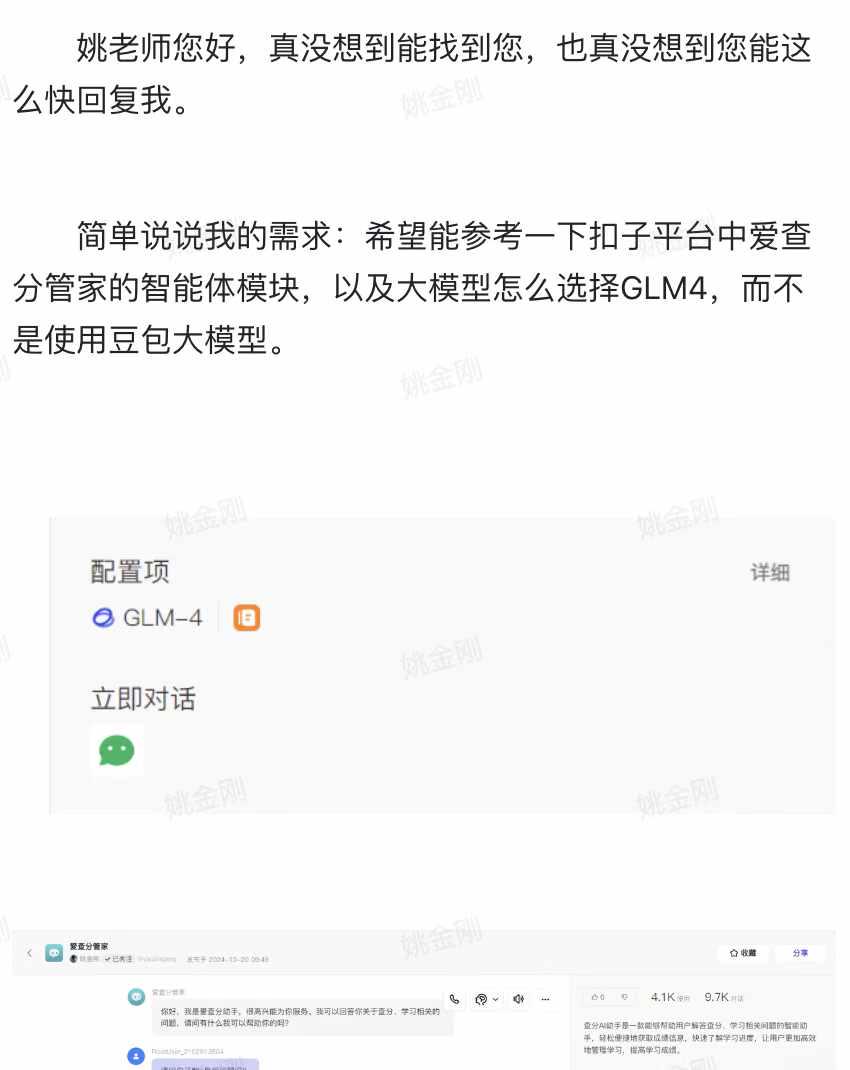
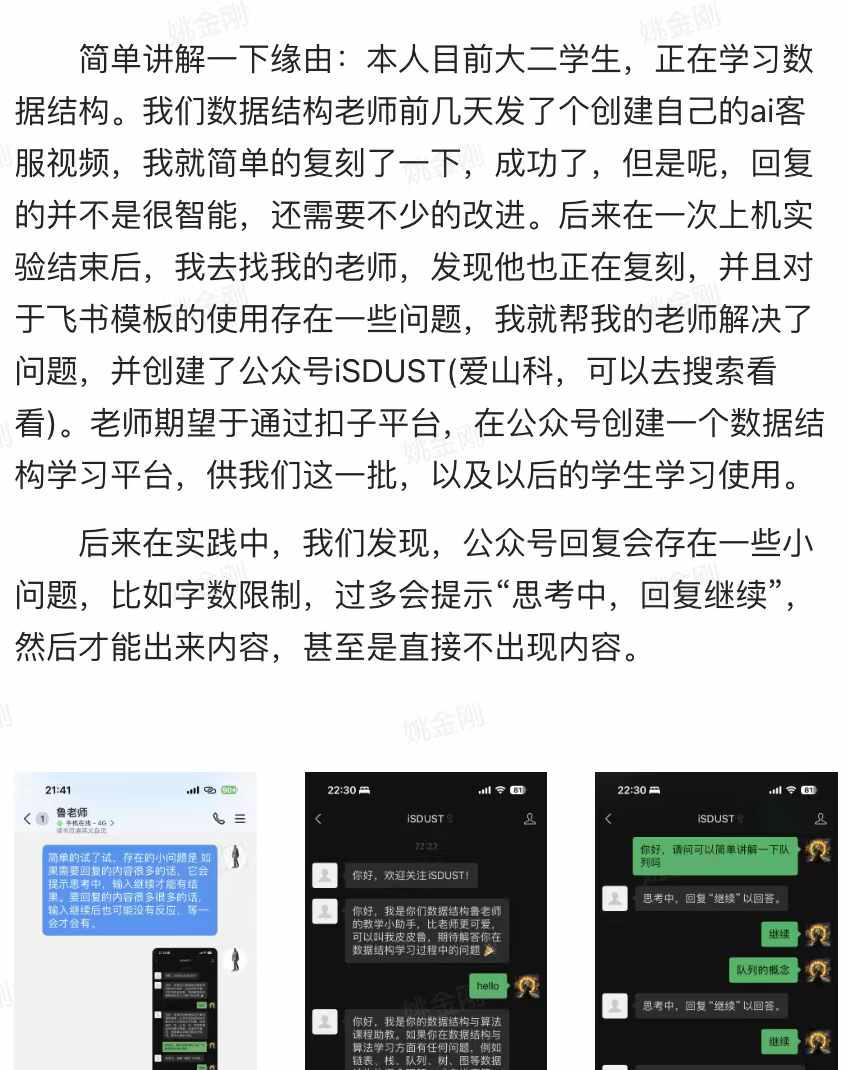
A sophomore student hit a snag while building an AI chatbot with his professor. He traced scattered clues, dug through documentation, and eventually found and messaged me on WeCom.
That persistence surprised—and moved—me. It reminded me of my own college days: diving headfirst into something new, scouring forums, emailing strangers, refusing to stop until the puzzle clicked.
I don’t shy away from unsolicited messages—especially from young people asking questions. That curiosity, that grit, that willingness to reach out? That’s not noise. It’s the signal worth listening to.