How Depression Forms—and How to Prevent It
Depression is surprisingly common—but understanding how it forms can dramatically reduce your risk of developing it.
Think of depression not as a mood disorder per se, but as a transition from one stable emotional system to another.
Once you’re inside a given system—say, System A (healthy emotional regulation) or System B (depression)—you tend to stay there for a long time. If you fall into System B, returning to System A isn’t easy.
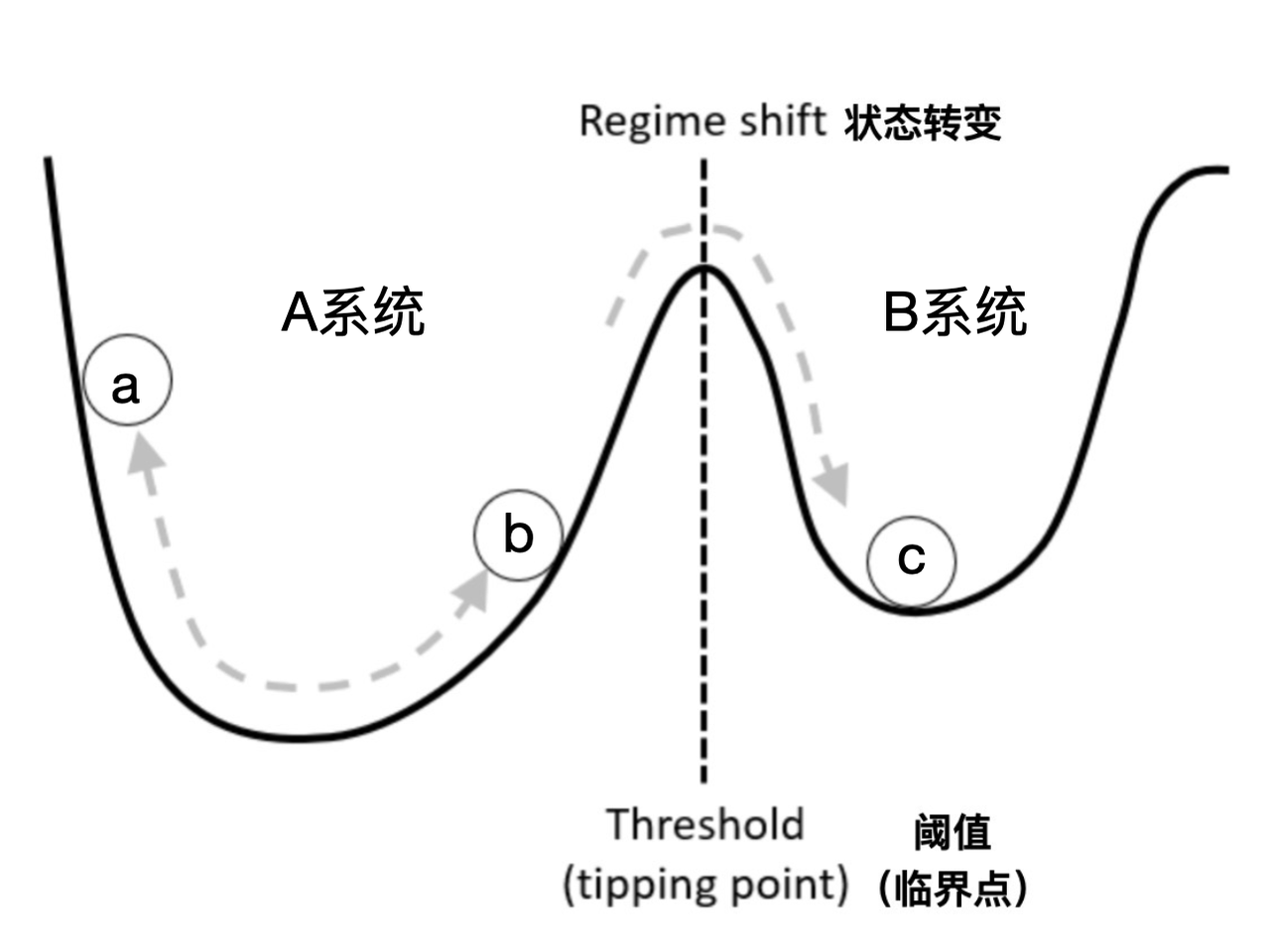
System A is your baseline: emotions fluctuate naturally—joy lifts you to point a, setbacks pull you to point b (discomfort, frustration), yet the system self-corrects quickly. It’s resilient.
But when stressors pile up—chronic work pressure, relationship strain, financial worry—the recovery speed slows. You linger longer at b. Your emotional “return time” stretches out. This is called critical slowing down.
If this persists, you approach a fragile tipping point—a threshold where stability collapses. Crossing it may take just one small trigger: the proverbial “last straw.” That’s why online memes warn: Don’t be overly harsh with others—you might unknowingly deliver that final straw.
That’s critical acceleration: once the threshold is crossed, the shift into System B (depression) happens fast—often seemingly out of nowhere. That’s why someone can seem fine one day and deeply depressed the next.
So what’s the value of knowing this?
Two things: scientific prevention and effective self-rescue.
Most depression-related tragedies stem not from treatment failure—but from ignoring prevention altogether.
If depression has already taken hold, many interventions exist—but one principle stands out: lean on external support. Cognitive therapy alone is often too slow and abstract—like lecturing a feverish person about thermodynamics.
External levers—gifts, exercise, good food, hugs, compliments, tidying up, travel—can gently nudge you from point c back toward the threshold, then use light “acceleration” to help you cross back into System A. Especially effective: buying something you truly want.
These aren’t just therapeutic—they’re profoundly preventive.
Depression isn’t a life-enhancing experience—but with insight and action, we can significantly limit its damage.
Medicine 3.0
In Lifespan, author David A. Sinclair introduces “Medicine 3.0”—a paradigm shift beyond today’s standard care.
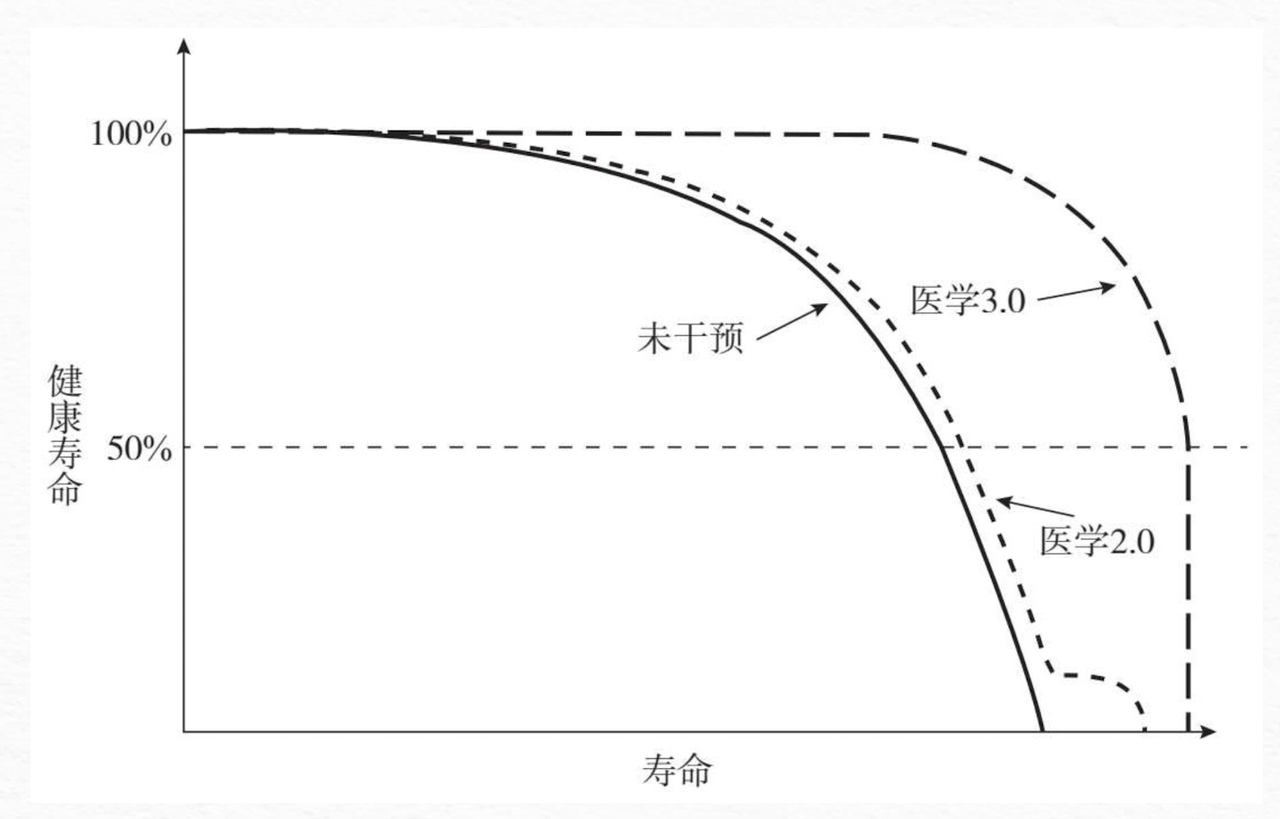
Modern medicine extends lifespan—but fails to extend healthspan: the number of years we live in full vitality.
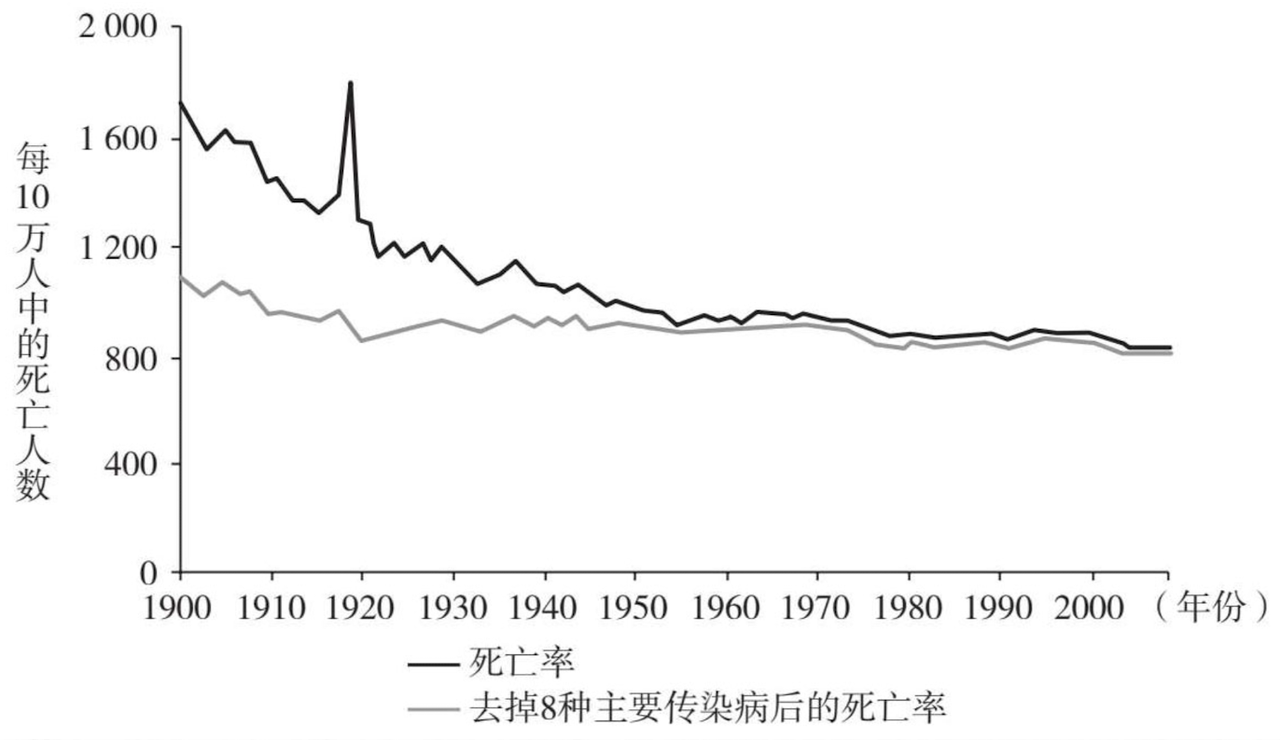
Most people spend their final 5–10 years burdened by chronic pain and disability—not because they die sooner, but because quality of life plummets. They survive—but suffer.
That’s the limitation of Medicine 2.0.
Medicine 3.0 flips the script: intervene before disease appears. Its goal? Maximize healthspan—not just lifespan.
The core idea is early, proactive intervention, built on five pillars: movement, nutrition, sleep, emotional health, and (when needed) medication.
At minimum, prioritize the first four. Read reputable books. Consult professionals. Because what feels “natural” often isn’t science-backed—just like running: simple in appearance, riddled with pitfalls in practice. True health science often feels counterintuitive at first—until it becomes habit.
In China, a handful of mission-driven companies are already pioneering this space—building tools, services, and platforms for proactive health. The road is steep—but the impact is profound, and the opportunity immense.
Imagine: in your final decade, eight of those years feel nearly as vibrant as your 40s. You travel, work, create, love—unhindered by a failing body. That possibility rests on one condition: your mind remains unclouded by physical suffering.
A Story About High Emotional Intelligence
A friend shared this:
He played mixed doubles with a world badminton champion—on the same team.
Their opponents? Also friends.
Here’s the twist: they always stop after two games—and the score is always 1–1.
Why? Because a third game would produce a winner—and ruin the spirit of the “friendship match.”
A 1–1 draw preserves harmony: the other team gets to beat a world champion once, while overall, no one “wins” decisively. Everyone saves face. No ego bruised. No tension created.
It’s not avoidance—it’s intentional calibration.
Why the Fed Cuts Interest Rates
To understand U.S. interest rate cuts, start with basics:
- The institution doing the cutting is the Federal Reserve (“the Fed”), America’s central bank—akin to China’s People’s Bank of China.
- One of the Fed’s core mandates: stabilize the macroeconomy.
- Its dual goals: sustain economic growth and curb runaway inflation.
- To hit those goals, it leans on two main tools: money supply and interest rate policy.
Money supply = total cash circulating in the economy. It directly shapes market liquidity.
Interest rates act like an economic barometer. When the economy booms, the Fed may raise rates—to cool overheating and rein in inflation. When growth stalls, it lowers rates—to stimulate spending and investment.
The logic is straightforward: lower rates mean lower returns on savings—and cheaper loans. Consumers borrow more. Businesses invest more. Money flows faster.
Example: During the 2008 global financial crisis, the Fed slashed rates and launched quantitative easing—cutting borrowing costs to revive consumption and investment.
Rate changes ripple across all financial markets: stocks, bonds, real estate. Lower mortgage rates, for instance, often boost home buying—and housing demand.
But policy impact isn’t just about the numbers. Market expectations matter just as much—if people anticipate future rate cuts, they may act now, amplifying the effect.
And because the U.S. dollar is the world’s reserve currency, every Fed move sends shockwaves globally. A rate cut can weaken the dollar, alter trade balances, shift capital flows—and prompt other central banks to adjust their own policies in response.
Sometimes, the Fed must choose: prioritize growth or inflation control. In a strong economy with rising prices, it may hike rates—even if that slows growth—because unchecked inflation erodes trust, wages, and long-term stability.
Eastern Medicine and the “Pre-Disease” State
Eastern medicine uses the term “pre-disease” (wei bing)—a state where illness hasn’t fully manifested, but imbalance is already present. Today, we’d call it sub-health or functional decline.
Preventing pre-disease from becoming full-blown disease is central to Eastern practice—while modern medicine typically waits until pathology is measurable before stepping in.
A foundational belief: the human body possesses innate, powerful self-defense mechanisms. When fully activated, conditions like cancer, heart disease, and stroke become exceedingly rare.
But poor lifestyle choices—junk food, sedentary habits, chronic stress—dull these defenses. Disease follows.
Think of your body as a pharmaceutical factory: it synthesizes substances that are both healing and toxic—depending on context, dosage, and timing.
For example: when you’re angry or under extreme stress, your brain secretes norepinephrine. Though tiny in quantity, its toxicity ranks among the highest in the human body—second only to snake venom.
Long-term anger or stress floods your system with this toxin—accelerating aging, weakening immunity, and raising disease risk.
Conversely, brain-derived endorphins—natural opioids—support memory, healthy relationships, motivation, resilience, and creativity.
And here’s the quiet truth: negative thinking is the root of most disease. Your thoughts shape neurochemistry. Your neurochemistry shapes your biology. Your biology shapes your life.