A Live-Streaming Operations Framework
I traveled to Tianjin with my former boss from an online school to meet the founders of an education-focused MCN. Five years ago, this company rode the first wave of Douyin’s live-streaming boom—and has sustained growth ever since, producing multiple iconic, creatively compelling cases worth studying.
Here are some key takeaways:
-
Core traits for hosts: resilience (willingness to endure hardship), strict execution (following instructions without hesitation), and sustained motivation to earn money.
-
These sound simple—but unpack them, and many aspiring hosts back out. “Resilience” means being ready to stream for eight hours straight, or going live at 11 p.m. even when tired. In practice, once a host finds their rhythm, such intensity isn’t permanent. But early on, the expectation of resilience—and the rigor of initial training—serves as a filter: it reveals who embraces uncertainty and discomfort head-on. Those people tend to be more adaptable and ultimately more successful.
-
Sustained earning motivation is surprisingly rare. Many hosts earn modest windfalls during early platform booms, then lose drive—and stop pushing themselves. Understandable, yes—but unhealthy for an MCN’s long-term viability.
-
It now takes roughly six months for a new host to develop genuine “platform intuition” and professional discipline—up from one or two months in earlier years. That makes early-stage selection critical: alignment and mutual trust between host and MCN must be exceptionally high.
-
Any host who demands a base salary or guaranteed minimum income—unless the MCN offers it proactively—is automatically declined. Why? Because the relationship isn’t employer–employee; it’s co-founder–partner. An employment mindset breeds friction from day one. A partnership mindset—grounded in shared goals and mutual respect—fosters healthy, scalable collaboration.
-
During dinner, one of their large accounts was suddenly banned by Douyin—causing significant loss. Yet the team barely blinked. They’d built redundancy into their strategy: dozens of accounts across tiers, so no single ban threatens survival. Account bans are simply part of the operational cost.
-
Beyond bans, host turnover remains a major risk—especially for MCNs reliant on just one or two stars. Their countermeasure? Systematically nurture multiple hosts in parallel.
-
Account assets—including ownership, access, and management—are held directly by the founders. All hosts stream only from company studios. This solves two problems at once: centralized account governance and stronger team cohesion.
-
A well-performing education MCN in Hangzhou uses a similar model: they recruit hosts nationwide—but require relocation to Hangzhou, near the office, before onboarding. Only then do they provide a large, fully equipped studio. The result? Exceptional host commitment—and predictable, scalable outcomes.
-
Many hosts fail not due to lack of talent, but low engagement. A top-tier host with background and ability invests 12+ hours daily in live-streaming. If you’re starting from scratch—with no network, no experience—and commit only 2–3 hours per day, expecting equal results is unrealistic.
-
The core value proposition of an MCN is income amplification: turning a host’s solo annual income of ¥300,000 into ¥3,000,000—a 10× lift. To deliver that, the MCN asks for two non-negotiables: deep engagement, plus those three foundational traits—resilience, execution, and enduring earning drive.
-
Capturing a platform’s live-streaming wave can rapidly scale a company—but sustaining or growing that momentum depends entirely on the founders’ capacity for cognitive evolution and organizational maturity. Markets shift. Algorithms change. What separates enduring companies from flash-in-the-pan successes is whether leadership can relearn, restructure, and lead through ambiguity.
Recent Reflections on Using AI
-
AI has moved decisively beyond abstract hype. Whether it will keep transforming our world isn’t debatable—it will.
-
The real work now lies in diving into concrete use cases: How can AI restructure workflows, boost efficiency, or disrupt entire models? That focus—on applied impact, not theoretical potential—is what sets 2024 apart from 2023.
-
Using AI effectively still benefits from basic programming thinking: loops, conditionals, recursion. With search engines, we ask questions to retrieve information. With AI generation tools (AIGC), we assign tasks to get outcomes. That’s a fundamental mental shift—even though AI can search, its true power lies elsewhere.
-
I call this “AI programming thinking”: a mindset capable of unlocking 100× productivity gains—not by automating one task, but by designing systems where AI handles batches, chains, or entire pipelines.
- I see five progressive stages of AI adoption. Mastering all five signals true fluency:
- Stage 1: Using AI purely for play or curiosity.
- Stage 2: Leveraging AI for information retrieval—like next-gen search.
- Stage 3: Using AI interactively to achieve learning goals.
- Stage 4: Deploying AI to complete real-world work tasks.
- Stage 5: Scaling beyond single tasks—orchestrating AI to execute batched, chained, or systemic workflows.
- At Stage 5, users don’t just ask for “one Python script.” They prompt AI to generate ten variants, each tailored to different inputs—or auto-generate documentation, tests, and deployment scripts alongside the code. That’s not just usage—it’s programming with AI.
Trying Out o1
This week, OpenAI launched o1—a new reasoning-optimized model.
According to official benchmarks, o1 matches human expert performance on many complex reasoning tasks.

On the 2024 AIME exam, GPT-4o scored just 12% (1.8/15). o1 scored 74% (11.1/15).
Sam Altman called the results “very satisfying.”
The difference isn’t incremental. Traditional LLMs like GPT-4o excel at pattern-matching and memorization. o1 adds something new: a human-like chain-of-thought—tracking each reasoning step explicitly. That boosts both accuracy and creativity.
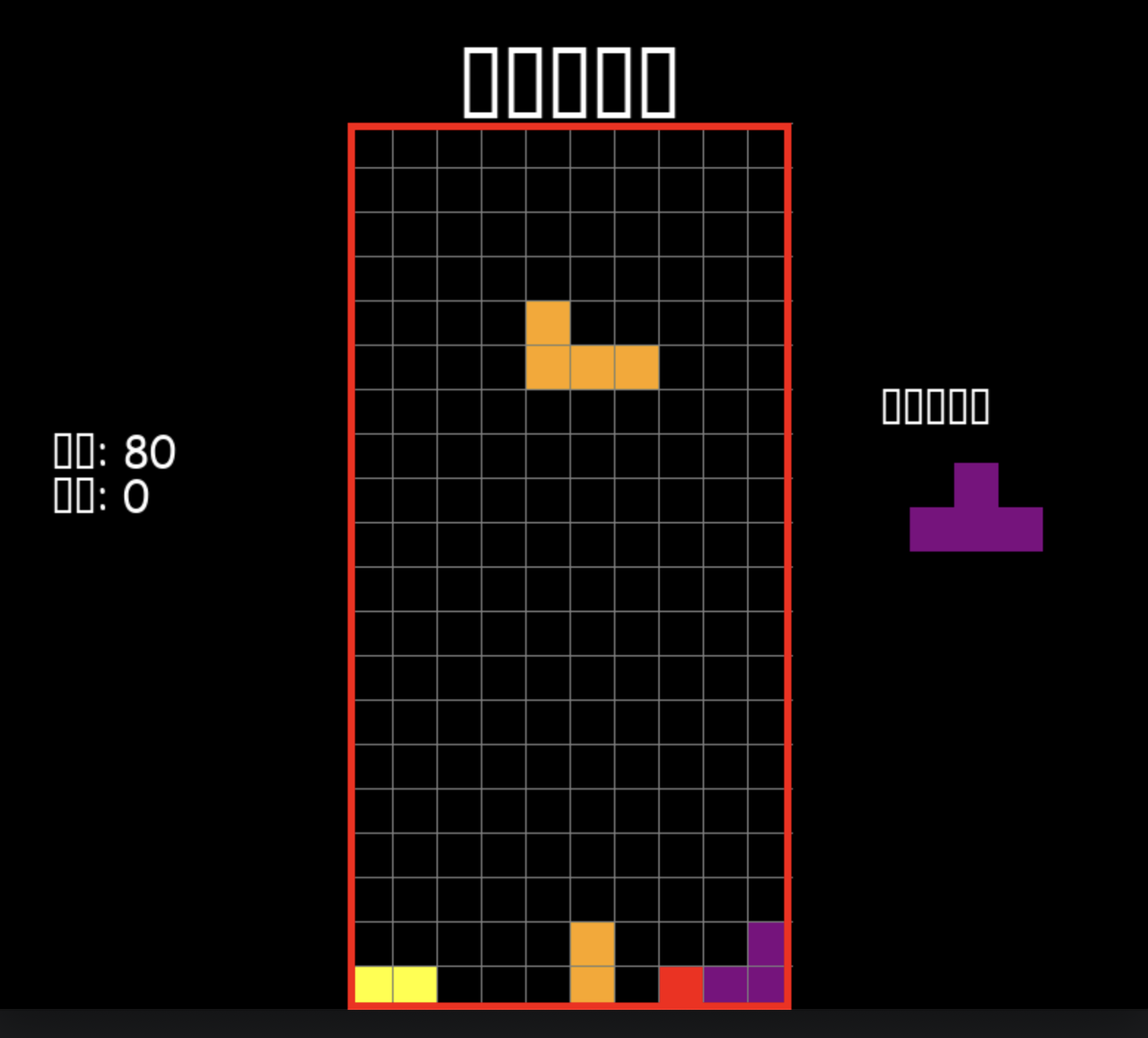
In practice, the difference is palpable. When I asked o1 to write a Tetris game in Python, it didn’t just output code—it walked me through its full design logic: how it models the board, handles rotation, detects line clears, etc.
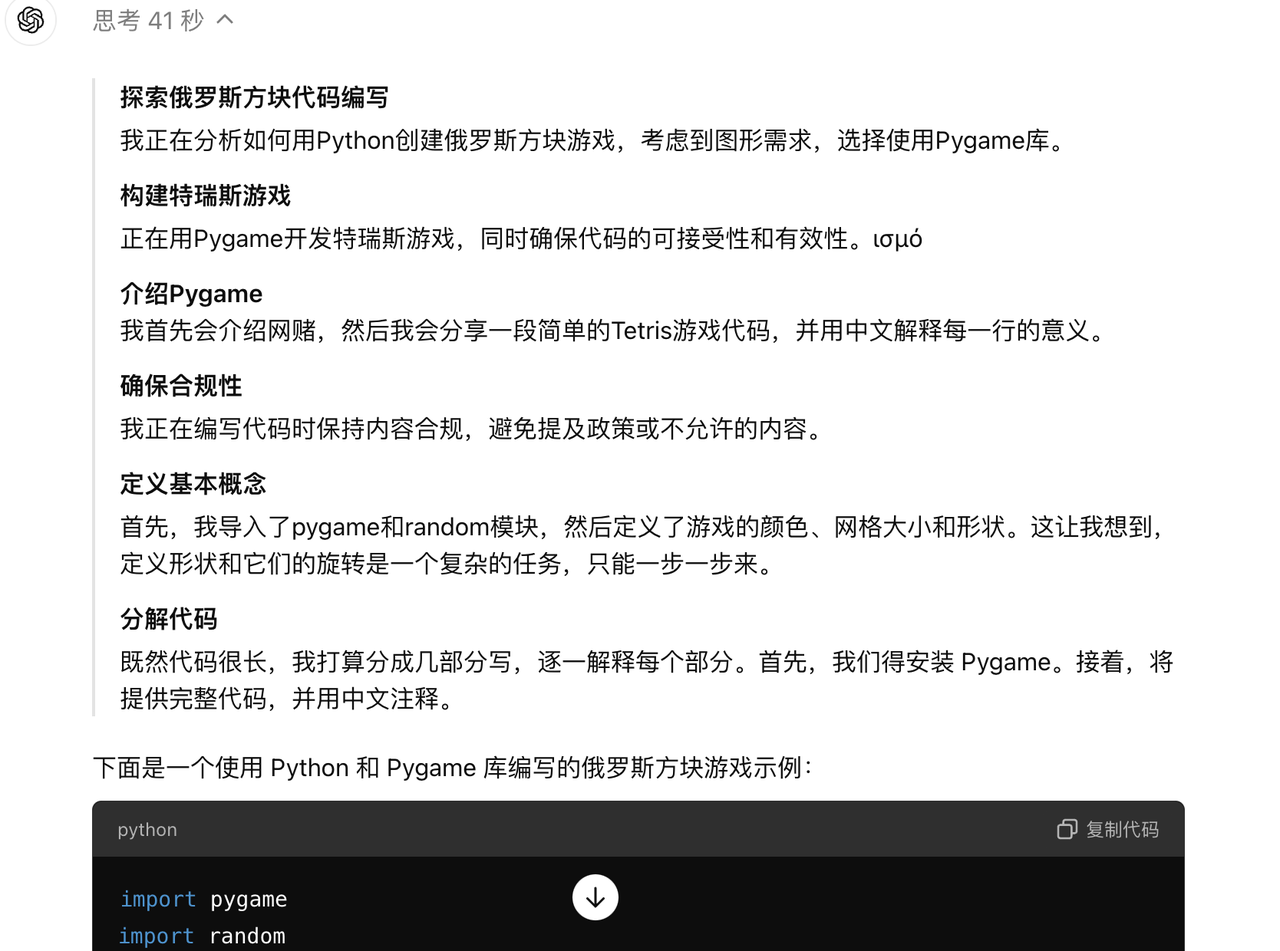
I copied the code into PyCharm and ran it—first try, zero debugging.
With GPT-4o, building the same game required multiple rounds of iteration and fixes.
How My Running Has Changed
Since restarting in June, completing my first half-marathon by late August, and continuing through now, my mindset around running has shifted dramatically.
-
I’ve moved from obsessing over pace to prioritizing heart rate and post-run recovery. Finishing breathless and drained isn’t sustainable—or healthy.
-
Ideal running delivers both: short-term dopamine (the runner’s high) and long-term endorphins (deep, lasting calm). That dual reward is the sign of a balanced, resilient practice.
-
In a recent short video interview, Lei Jun remarked that, with experience, he realized running is deeply technical.
-
Indeed—many “simple” physical activities reveal surprising complexity upon deeper study. Running is a systemic discipline requiring integrated knowledge: physiology, biomechanics, psychology, data science, and periodized training.
-
It’s not enough to log miles or chase speed. Real progress comes from accumulating time in aerobic zones, guided by heart-rate data—not arbitrary distance targets.
-
Going deep means understanding why each metric matters—the science behind lactate thresholds, VO₂ max, stride economy—and pairing theory with relentless practice. Expertise emerges only when theory and lived experience reinforce each other.
-
Run in your aerobic zone. Roughly 80% of weekly volume should stay there—around 75% of your max HR. For me (max HR = 185), that’s ~140 bpm. Staying here builds endurance safely. Exceeding it shifts effort into anaerobic territory—less effective for base-building, more taxing on joints and recovery. To stay in zone, simply slow down.
-
Cadence matters immensely. A healthy range is 180–200 steps per minute. Below 180 often signals inefficient form: longer ground contact time, higher impact—especially on knees.
Superstition vs. Faith
Religious superstition assumes doctrine is infallible—capable of explaining everything, immune to error.
Scientific faith operates differently: it expects error. It holds current models provisionally—knowing they’ll be refined, replaced, or discarded as evidence accumulates and understanding evolves.
Its core ethic isn’t certainty—it’s truth-seeking. And unlike dogma, it rejects any single, final, all-encompassing theory.