Why We Procrastinate
We procrastinate—not because we’re lazy, but because we’re unfamiliar.
The brain is wired to conserve energy: it prefers the familiar, avoids discomfort, and steers clear of perceived risk. The higher our standards for a task, the more intimidating it feels—and the more we delay.
I recently helped a friend recruit lead instructors in Beijing. A striking pattern emerged: many top-tier teachers consistently delayed delivering course recordings or lecture notes—often submitting only at the last minute, or even later.
Some claim “smart people procrastinate.” But that’s misleading. What’s really happening is that high-standards people—often highly capable—tend to overthink, over-prepare, and under-start. Procrastination isn’t a trait of the gifted; it’s nearly universal, especially when facing something new or ill-defined. It’s simply how brains default.
So how do we stop?
One of the most effective ways is to start small, early, and daily:
- Think about the task every day—even briefly.
- Collect related information.
- Sketch its structure or outline.
Why does this work? Because each time you engage—even mentally—you activate neural pathways. With repetition, the task shifts from “unknown threat” to “familiar terrain.” Once familiar, action flows more easily. It aligns with your brain’s nature instead of fighting it.
Writing a book, designing a course, drafting a proposal—all follow this logic. Familiarity precedes fluency.
Why We Should Encourage Mistakes
Mistakes aren’t dangerous. What is dangerous is letting fear of mistakes shrink our curiosity, stall our action, and trap us in a fixed mindset.
Compared to abstract theory, real-world errors deliver richer, faster, more actionable feedback. For children, “mistakes” are often just outcomes that differ from adult expectations—or clash with social norms or parental authority. But the feedback itself—not the label—is what fuels growth.
When kids learn through doing—and iterating on results—they build resilience, agency, and self-correction skills far beyond what lectures or rules can instill. Their potential becomes unbounded.
Adults need the same shift. When reality diverges from expectation, don’t declare it “another failure.” Instead, ask:
- Where did our assumptions go wrong?
- What gaps existed in judgment or execution?
- What concrete lesson can we extract?
This turns “errors” into fuel. Over time, we stop fearing missteps—and start relying on them to refine ourselves. That’s how we move toward genuine freedom: life isn’t about avoiding wrong turns, but navigating possibility with clarity and courage.
Growth Mindset
As psychologist Carol Dweck writes in Mindset: “What separates people isn’t talent—it’s mindset.” Specifically: fixed vs. growth mindset.
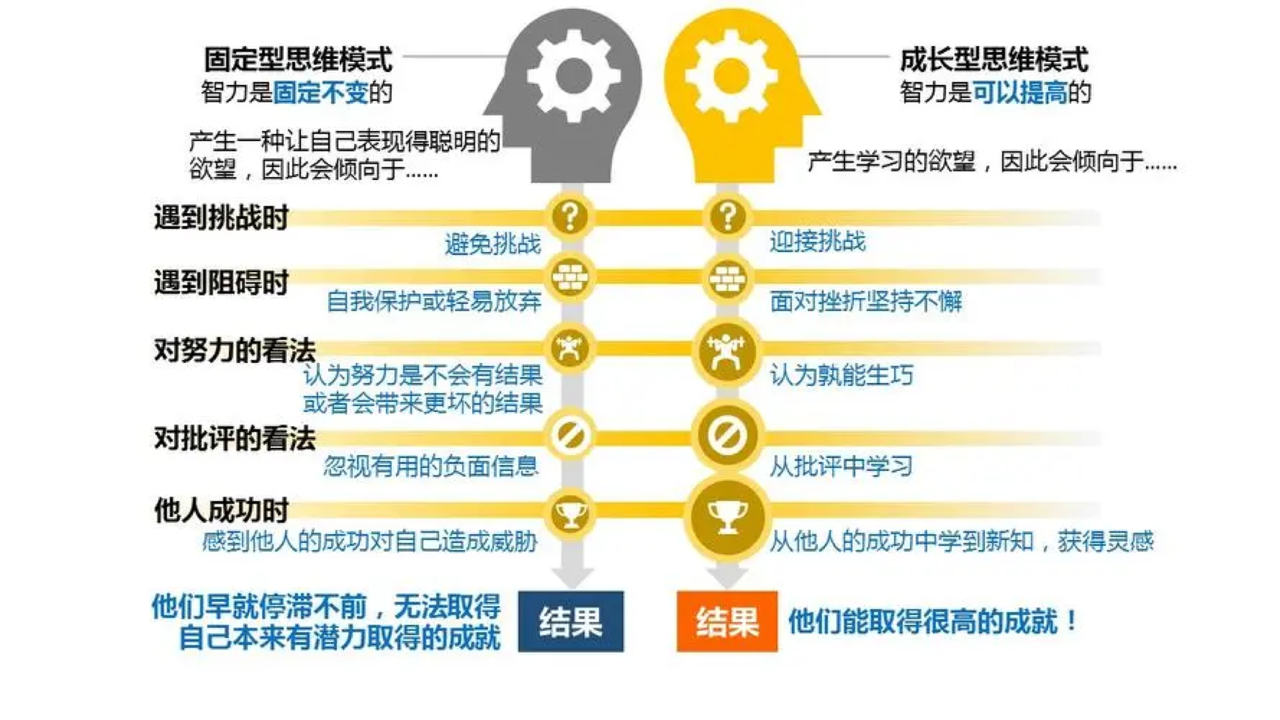
Fixed mindset: Believes ability is innate and static. People label themselves (“I’m bad at math”) or others (“She’s just not a leader”). Success confirms identity; failure threatens it. Progress halts after achievement—or collapses under setback.
Growth mindset: Believes ability is cultivated—through deliberate practice, feedback, and strategy. Labels dissolve. Setbacks become data points: “What worked? What didn’t? How do I adjust?”
Becoming growth-oriented isn’t optional—it’s essential. Fixed-mindset people rarely break through mediocrity. They aim only to finish. Exceptional people aim to master. “Done” is baseline. “Done well”—with insight, elegance, and impact—is the real threshold. And the gap between the two is enormous.
Financial Thinking
A friend asked: How do I quickly develop financial thinking?
I’m no expert—but after years of running startups, here’s how I break it down: three core awarenesses—cost, income, and assets.
Cost Awareness
Know exactly where money goes.
A startup incurs costs everywhere: rent, equipment, internet, payroll, social insurance, supplier fees—even tiny recurring expenses add up fast.
We recently audited operating costs for our Tianjin office—and found actual spending was twice our estimate. Why? Because individual line items seemed trivial: rent, training, management fees, reimbursements… until totaled.
Cost awareness also includes hidden costs: opportunity cost, time cost, management overhead. Only after repeated oversights—or painful losses—does this awareness crystallize.
How to build it? One company shares their method: allocate every fixed and variable cost (e.g., prorated rent, shared staff hours) to each project—and show project leads weekly income vs. cost reports. Transparency breeds discipline.
Income Awareness
Focus on three levers: revenue, profit, and cash flow.
Revenue alone is meaningless. It doesn’t reflect efficiency—or sustainability. Small businesses must prioritize profit (quality of revenue + operational discipline) and cash flow (real money in the bank).
A project may show 40% gross margin—but if clients pay late, or not at all, that “profit” is theoretical. Cash flow reveals truth.
Asset Awareness
Distinguish assets (what puts money in your pocket: cash, receivables, equipment) from liabilities (what pulls money out: payables, loans, customer prepayments).
Understanding this helps run healthier operations—and applies equally to households. Clear asset/liability awareness dramatically lowers personal financial crisis risk.
Still, the foundation remains: earning power. Strengthen that—and everything else becomes manageable.
Compounding and Leverage
Online discussions about the “35-year-old crisis” often echo: “Too old to hire, too young to retire.”
But the real crisis isn’t age—it’s absence of compounding and leverage.
Compounding means each action gains value over time: reading, building character, investing, exercising. Its returns accelerate silently—then compound visibly.
Leverage means one input yields outsized, scalable output: launching a course, writing a book, shipping software, founding a company—or owning equity in one.
Without either by your mid-30s, bottlenecks become inevitable. But if you’ve deliberately built compounding assets (skills, networks, systems) and leverage points (products, IP, equity) earlier—say, between 30–40—you’ll face challenges calmly. You’ll operate from wu wei xin (effortless mind) and you wei fa (purposeful action).
Four Subjects Worth Learning for Life
Start early. These four disciplines shape how deeply we understand reality—and our place in it:
- Mathematics and Physics: Reveal the universe’s underlying logic—the “magic of nature.”
- Language (Chinese, in context) and Programming: Encode human thought, collaboration, and creation—the “magic of civilization.”
Mastering them doesn’t mean expertise in all four. It means cultivating the habits of mind they train: precision, modeling, abstraction, communication, and systematic problem-solving. That’s the real lifelong curriculum.