The Quiet AI Revolution
- Fewer people around me are talking about AI these days.
- But those who are still discussing it have grown markedly more pragmatic—shifting from abstract speculation about “the future” to concrete questions like: What have we actually built with AI this month? What processes are worth rethinking or rebuilding?
- Though AI no longer dominates headlines as it did early this year, many teams are quietly reshaping their products with it—and seeing tangible progress.
- Take tools: AI-powered enhancements to key features have driven significant lifts in growth and daily active users.
- In our recent internal AI experiments, core growth metrics jumped fivefold. I’ve heard similar results from several friends—across different domains and user bases.
- Yet the most effective adopters say the least.
- So “quiet AI” has two main sources: first, the crowd that came for spectacle has left, and the “get-rich-quick” operators have run out of targets; second, a smaller group is quietly capturing real value—and choosing silence over sharing.
- A friend once told me repeatedly in WeChat: “Don’t share. Just earn quietly.”
- I agree—but let’s not mistake quiet adoption for diminished potential. AI remains the biggest surprise of the year. Its transformative scope is still vast. If you wait until everyone else has explored the obvious use cases, your window will have closed.
CPM-Based Resource Valuation
You run a WeChat official account, a private-community channel, a mini-program, and a website. How do you objectively assess the commercial value of each placement—a banner slot, a push notification, a landing page section?
If you’re testing multiple ad formats, how do you compare their ROI?
If you’re iterating on product variants or copy versions, how do you quantify which delivers more value?
We often default to either final revenue or mid-funnel conversion rates—but neither captures true unit economics well.
In advertising, CPM stands for Cost Per Mille (per thousand impressions). The formula is:
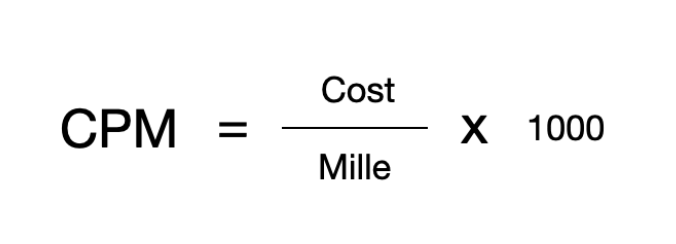
Example: Your ad gets 1,000 impressions and generates ¥10 in revenue → CPM = ¥10. That’s ¥0.01 per impression.
The power of CPM lies in its ability to assign precise, comparable monetary value to each exposure—not just to funnel stages. Process metrics (e.g., click-through rate) matter too—but mainly as diagnostic signals: they point to where optimization is possible, not what the ultimate value is.
Choice Is a Core Competency
Choosing well is one of the most consequential skills in life.
Yet we routinely misfire in two ways:
First: Spreading effort evenly—treating all decisions as equally important.
Second: Making high-stakes choices hastily while obsessing over trivial ones.
The first error stems from failing to distinguish signal from noise. In reality, only ~10–20% of our decisions shape our lives meaningfully. Nail those—and everything else falls into place.
The second error reflects a lack of confidence in big-decision judgment. So we flip the script: rush through marriage, city choice, career moves, or home purchases—then agonize over font size or meeting agendas. The rational reversal? Invest deeply in major decisions. Delegate or streamline minor ones. Major decisions include: whom to marry, where to live, what job to take, whether to start a company. These demand time, research, and reflection—or risk irreversible regret.
Why Trying to Change Others Is Self-Defeating
We know, intellectually, that changing adults is nearly impossible. The wiser path is selection, not transformation. Yet we persistently overestimate our influence—and keep trying.
How do we try? Through long lectures, mandatory training, or hands-on coaching.
And yet—the change we get is negligible. Worse: the less someone changes, the more we double down—creating a slow-burn cycle of mutual exhaustion.
How to break free?
Ask first: What outcome am I really after? It’s never “to change this person.” It’s to achieve a result—say, reliable customer support, accurate reporting, or timely delivery. The person is merely a means. So the smarter move isn’t to train this person into compliance—it’s to design a system that attracts, selects, or enables the right person to deliver the result.
EdTech Tools: Light-Asset vs. Channel-Heavy Models
EdTech tools broadly fall into two camps:
- Light-asset, internet-native models: Products like Classroom Butler, Homework Help, XiaoYuan Search, BanXiaoEr, and YiChaFen—built for direct user acquisition via app stores, search, and social sharing.
- Channel-heavy, school-first models: Companies like Qitian Network, HaoFenShu, YiQiZuoYe, and XiaoYang Group, whose go-to-market relies on sales teams, district-level partnerships, and lengthy procurement cycles.
School-channel models inevitably burn cash—and face mounting receivables pressure.
Internet-native models, by contrast, tend to sustain themselves well—if they avoid over-engineering or chasing vanity metrics.
There Are Almost No Active Investors Left in China
I caught up recently with a former boss.
Over the past few years, several of his startups folded. Last December, he launched a new venture—and raised over ¥10 million in seed funding. His personal valuation? Over ¥100 million.
But this year, he says, “There are almost no investors left who dare to invest—or even return calls.” Deal flow has dried up. Most have stopped writing checks altogether.
And raising capital isn’t always a win: once you take big money, small-profit paths vanish. You’re locked into one of two outcomes—go public or go under. With IPOs now exceedingly rare, many founders feel trapped.
He joked that he envies my situation: modest scale, no outside funding, and—most importantly—a steady, sustainable rhythm.
Why Top-Tier Hospitals Win
A fellow patient in my hospital room was from Fujian.
Before coming to Peking Union Medical College Hospital (PUMCH), he’d spent a full year at a provincial hospital in Fuqing—undergoing tests, then surgery—yet never received a definitive diagnosis. The surgery left him with lasting side effects: numbness in his mouth, caused by nerve damage from imprecise technique.
He got a referral to PUMCH. There, two things stood out:
- Diagnostic speed: A cause that eluded doctors for 12 months was identified in days.
- Surgical precision: His follow-up procedure had zero side effects—and he felt no pain post-op.
Top hospitals excel not just because of better doctors or equipment, but because they see orders of magnitude more cases. That volume sharpens pattern recognition, refines judgment, and elevates both diagnostic accuracy and procedural safety. The bigger the hospital—and the more complex its caseload—the steeper that advantage grows. That’s why patients keep flocking to them, despite the hassle.