The Art of Gift-Giving
A friend once shared a key principle of gift-giving: “Better to give the chicken’s head than the phoenix’s tail.” In other words: choose a high-end brand in a small, niche category—not a mid-tier item in a mainstream one.
For example, with a ¥1,000 budget, a premium lighter feels more surprising and memorable than a mid-range Xiaomi smartphone.
This rule holds especially true for recipients with stronger financial means—because for them, the showcase value of a gift matters more. So aim for “small-category, big-brand.”
Another vital principle: give what they love—not what you love. If someone doesn’t smoke, a luxury lighter will feel awkward and misplaced. That’s often the hardest part: truly observing and intuiting their preferences.
So the two essentials of thoughtful gifting are: (1) favor the chicken’s head over the phoenix’s tail—and (2) prioritize the recipient’s taste over your own.
On WeChat’s Mutual Selection Ads
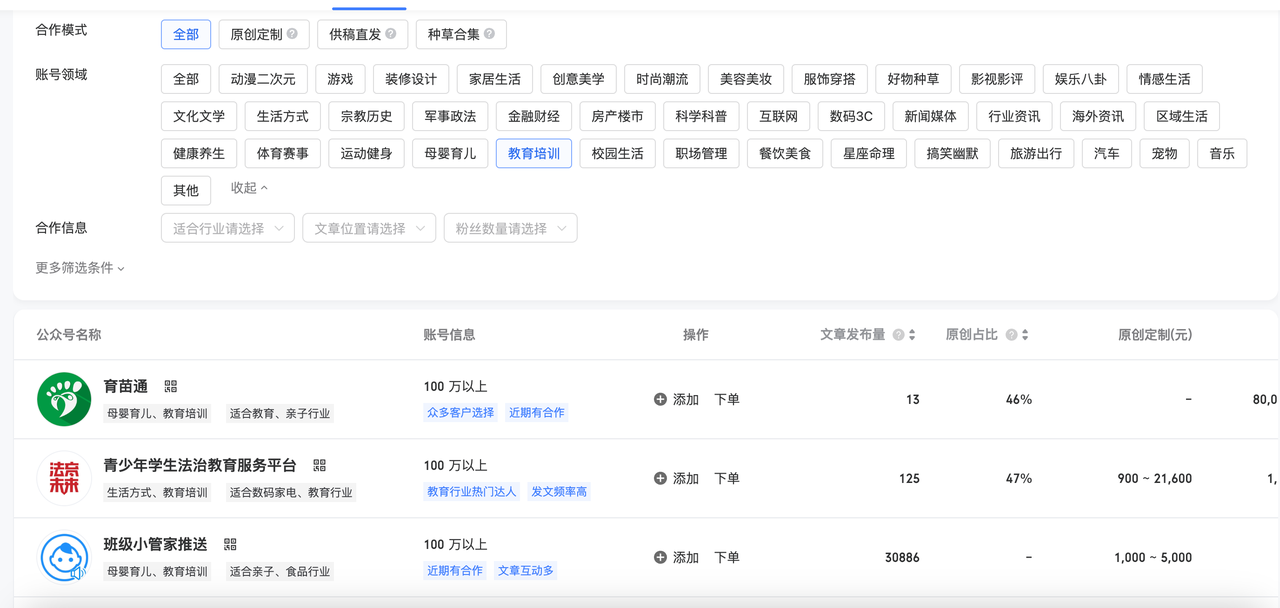
I tested WeChat’s Mutual Selection advertising platform. Overall impression: platform involvement brings positive influence on ad standards and ecosystem health. As mechanisms mature—especially around oversight, workflow, and content guidelines—WeChat Official Accounts can sustain relevance and growth for much longer.
Research Is Turning Hidden Cards into Visible Ones
“Business is like warfare”—a fitting metaphor. Whether you’re freelancing, building a personal brand, launching a startup, or even working inside a company, your real competitors are numerous and often invisible.
The core of research? Aggressively gather information that helps you—not just data for its own sake.
Imagine living without any research habit: everything you “know” would be pure imagination—your version of “how things should be.” Reality, however, rarely matches that internal script. The gap between imagined and actual is usually vast.
Effective research focuses on two areas:
- Competitors: Study how they’ve validated their model—what works, what metrics they track, who their customers are, and what those customers truly need.
- Users: Talk directly to customers. Listen to their feedback—not assumptions.
Avoid Negative Words
In Thirty Million Words: Building a Child’s Brain, a key finding stands out: What you say may become reality.
Every word you speak—consciously or not—shapes your subconscious. Over time, your behavior begins to fulfill those spoken patterns.
Say “I can’t do anything right,” even casually—and you’ll likely quit sooner, withdraw more easily. The more negative words you use (intentionally or not), the more your body and emotions lean into negativity.
Conversely, consistently using positive phrasing—even offhand—gradually shifts both behavior and mood toward resilience. Only sustained positive action makes continuous growth possible.
So stay alert to your own negative language. When you catch it, pause—and replace it with an empowering alternative. Let your ongoing growth be your north star.
How to Make Complaints Disappear—Joyfully
We complain easily: outwardly (at others) or inwardly (at ourselves). Neither helps.
Complaining outwardly risks hurting relationships, sparking arguments, or veering into verbal aggression.
Complaining inwardly harms your sense of self—feeding depression, self-doubt, and paralysis.
The best antidote? Expand your perspective.
How? Set a bold, meaningful long-term goal—and reflect on it daily. Ask: What steps move me closer? What does success actually look like?
After some time, you’ll notice: many things you once fixated on no longer feel urgent. Against the scale of your larger purpose, they shrink—becoming trivial. When little stirs you, complaints fade naturally.
How to Do What You Love and Get Paid for It
Answer: Find the overlap—between what you love and what others genuinely need.
That intersection is where sustainable income lives.
Example: You love literature, enjoy writing, teach writing methods, and hike regularly. Your audience needs practical writing guidance. So launch a writing-method workshop. You do what energizes you—and earn while doing it.
A Few Principles After Depression
- Don’t expect full understanding from non-professionals. Trust yourself first. Unless someone has lived through similar pain—or trained professionally—they’ll likely default to clichés or moral pressure. Their intentions may be kind—but capacity is limited.
- Seek professional support: licensed therapists, psychiatrists, or peers with lived experience. They’re far more likely to meet you with empathy—not judgment.
- Start treating yourself kindly: buy something you’ve long wanted but hesitated over; spend time in nature; take a short trip; play freely. These aren’t indulgences—they’re repairs.
Design Your Business Model Around Competitors
Positioning theory teaches a core truth: The heart of business strategy is competitor-centric design.
We often skip deep competitor analysis—assuming our product is uniquely brilliant, unmatched by any rival. When users don’t buy, we blame their “lack of taste.” But the truth is simpler: your competitors are likely stronger—and more nuanced—than you assume.
If You Can’t Understand Something in a Year, Pause the Search
If a topic remains unclear after 12 months—especially abstract, philosophical ones like “the meaning of life” or “the nature of reality”—step back.
How many have spent lifetimes on these questions and found no final answer? Why assume you’ll crack them faster?
The most grounded path forward is strategic redirection. Yes—life’s big questions matter. But for most people, what matters more is cultivating presence: mastering today’s small tasks, engaging deeply with the world, and accumulating lived experience. With time, clarity often arrives—not from force, but from readiness.
Life Is Like Climbing a Ladder
Life resembles climbing a ladder. Each rung represents growth—not just achievement, but expanded awareness.
Some climb ten rungs a year—using focus, mentorship, and leverage. Others stall for a decade on one step.
The higher you climb, the clearer your vision becomes: your perspective, values, emotional range, and understanding of complexity all deepen.
How to climb higher? Leverage external support. Stay focused. Practice generosity.
Why Is Sustained Focus So Hard?
Because our grip on desire is weak. We constantly want this and that—so attention splinters. That fragmentation isn’t just distraction—it’s internal friction.
How can adults train focus?
Start with meditation: a proven, low-barrier way to strengthen attentional muscle. Then anchor practice in tiny, tangible acts—like tending a single plant, or reading just 10 minutes without interruption. Consistency builds capacity—slowly, steadily.