The Second GEO Public Session
This was my second GEO public session with Professor Xiangyang on WaytoAGI. The next session is scheduled for July 25 at 8 p.m., focusing on GEO source strategy.
The theme of this session was GEO Content Engineering - a topic that’s notoriously hard to teach, yet essential to cover systematically. Doing so helps participants understand why GEO demands higher standards from content, and why its management and operational logic differs fundamentally from traditional marketing approaches.
In my view, only when you internalize this layer of understanding - and pair it with hands-on capability - do you truly possess precision GEO operations.
First, recognize that AI’s external citation strategy is far more nuanced than most assume. For the same question, an AI might list a dozen sources - but only two or three actually shape the final answer. Some links appear in the reference list but are never used in the response; others get cited repeatedly across a single answer, becoming structural anchors and recurring evidence.
So why does AI cite just one article out of hundreds published? If GEO is simply about prompting AI to write articles, why do some AI-generated pieces get cited while others sit untouched? If GEO is just keyword coverage, why does AI ignore keywords that appear dozens of times?
The real issue isn’t “Did we publish enough?” - it’s “Does AI treat your content as reliable evidence?”
Many teams default to legacy content tactics: publish more articles, distribute across more channels, stuff more keywords, generate multiple AI drafts. But none of that explains the core phenomenon: Why does AI cite A and ignore B?
That’s exactly what the GEO Content Engineering framework aims to answer.
Live session summary (in Chinese): mp.weixin.qq.com
Here’s a distilled set of key insights and methods:
- GEO’s essence is earning AI’s trust - getting it to call upon, reuse, and cite your content repeatedly.
- An AI citation looks like a search result - but underneath lies an evidence-scoring mechanism.
- “Content quality” is too vague. What’s operable are relevance, authority, extractability, and verifiable evidentiary value - leading to concrete, measurable content features.
- Today’s AI most urgently needs ready-to-use evidence blocks.
- Whether an article gets cited depends not on visibility - but on whether it can become part of the answer.
- Traditional content ops optimize for human reading; GEO content engineering optimizes for machine comprehension, judgment, and assembly.
- AI prefers content that reads like academic papers, encyclopedias, or research reports - not emotionally charged marketing copy.
- Publishing 100 low-evidence articles delivers less value than crafting 10 high-evidence-density assets.
- High-citation articles tend to feature clear evidence, stable structure, and easily extractable conclusions.
- Keyword era -> density matters. Semantic era -> relevance rules. GEO era -> evidence combinations decide.
- GEO doesn’t optimize rankings - it optimizes probability: the likelihood your brand gets recommended, cited, and trusted.
- At its core, content engineering transforms chaotic content creation into a decomposable, reusable, and attributable system.
- No problem map -> no GEO strategy. No knowledge base -> no high-quality content.
- Real GEO competence isn’t about writing good prompts - it’s about closing the loop between questions, evidence, structure, sources, and feedback.
- Prompts define form; knowledge bases define substance.
- Identical prompts won’t homogenize output - thin knowledge bases will.
- Content engineering isn’t about single articles. It’s a system defined by goals, elements, and their relationships.
- A key GEO engineering mindset: translate leadership’s fuzzy aspirations into system-level requirements - executable, measurable, and improvable.
- GEO’s biggest risk isn’t low traffic - it’s doing many things without knowing which ones actually moved the needle.
- Future content teams will compete on evidence assets, structural fluency, and feedback-driven iteration.
Related resources:
- GEO Content Engineering Handbook & Evaluation Criteria doc.laoyao.cn
- GEO Content Engineering Systems Report doc.laoyao.cn
- GEO Content Engineering Methodology & Single-Article Tutorial doc.laoyao.cn
- Thinking in Systems, Everyone Should Understand Engineering
- GEO: Generative Engine Optimization doc.laoyao.cn
- Generative Engine Optimization in Digital Repositories: Optimizing Visibility for Generative AI doc.laoyao.cn
- A Measurement Framework for Generative Engine Optimization Across AI Search Platforms doc.laoyao.cn
Tools & utilities:
- GEO rewriting prompt: ai.laoyao.cn
- GEO rewriting Skill: ai.laoyao.cn
- GEO feature annotation demo (single-article): doc.laoyao.cn
GEO systems & Skills:
- GEO Skills: github.com
- GEOFlow: github.com
- Meta Skill: github.com
Defining What Not To Do
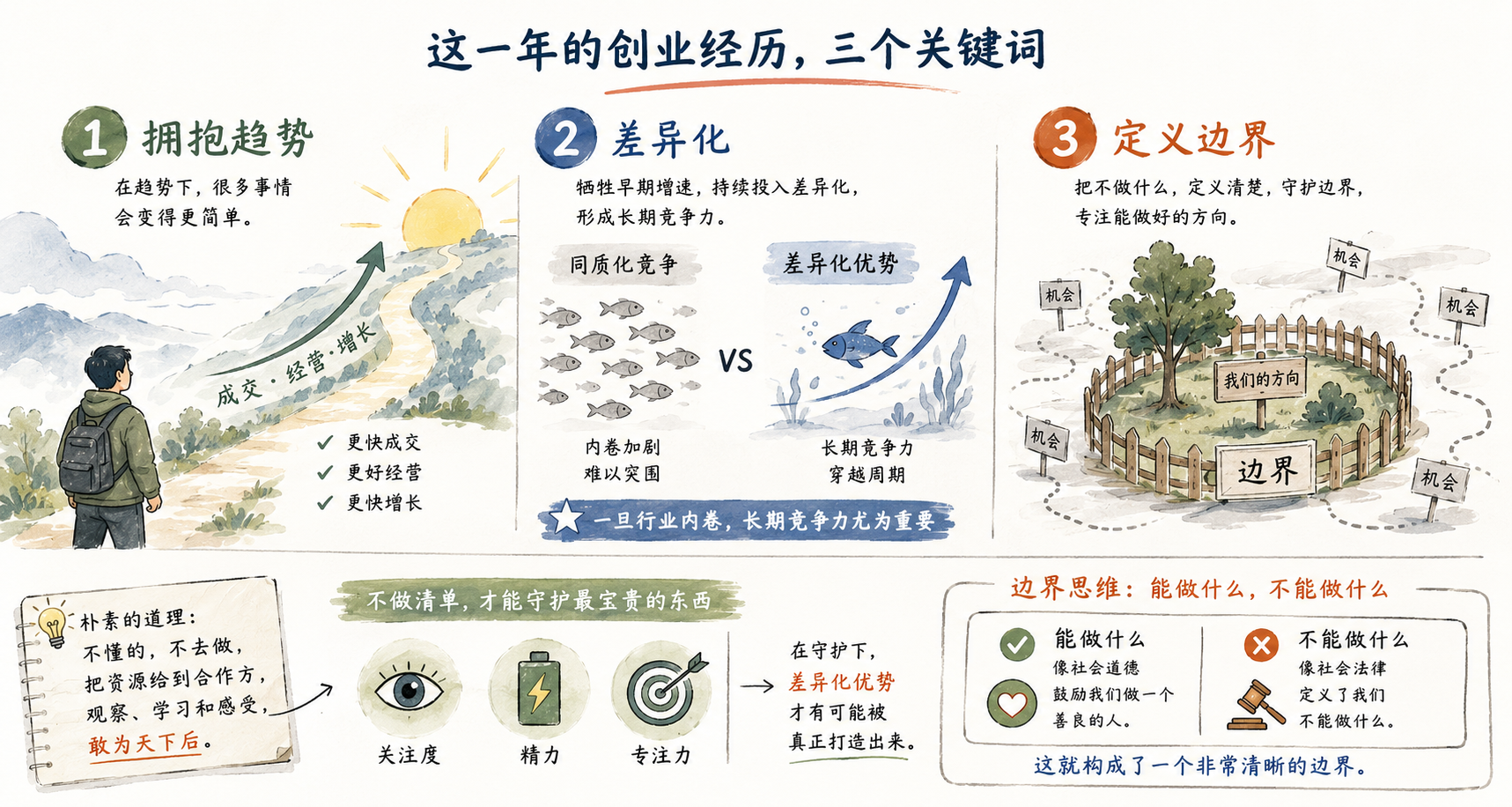
This year’s entrepreneurial journey crystallized around three words: embracing trends, differentiation, and defining boundaries.
Embracing trends matters - under favorable conditions, sales, operations, and growth all become simpler.
Yet even amid simplicity, differentiation remains vital. Building a product with genuine differentiation may slow early growth - but it directs finite resources toward reinforcing that edge, forging sustainable competitive advantage. That advantage becomes indispensable once the market turns crowded.
That’s why defining - and guarding - boundaries is critical.
Trends reveal many opportunities - but most aren’t yours. Only the direction you can master, choose to focus on, and iterate on relentlessly qualifies as your opportunity.
So the core discipline is clarifying what not to do - and protecting it rigorously.
There’s a simple truth behind this: Don’t do what you don’t understand. Instead, allocate resources to trusted partners - observe, learn, and absorb. In other words: Dare to be second.
A “not-to-do” list safeguards what’s most precious - and easiest to overlook: your attention and energy.
Only within that protected space can your differentiated advantage truly take root.
Boundary-setting applies not just to companies - but also to products and services. Clarity comes from answering two questions: What can we do? What must we not do?
“What we can do” functions like social ethics - encouraging kindness and integrity. “What we must not do” functions like law - drawing hard lines. Together, they form an unmistakable operating perimeter.
What Makes a Good Salesperson
A new sales hire recently led a practice session in the afternoon. Afterwards, the team discussed various sales techniques: plain language, real-world examples, the 80/20 rule, audience awareness, storytelling, etc.
But I kept thinking: great sales rests on a simpler foundation.
Two words capture it: authenticity and expertise.
Authenticity means transparency - no hidden agendas, just genuine care for the client’s success. Expertise means diagnosing real problems and offering sound, actionable guidance.
That’s enough.
It echoes this truth: Sales isn’t about lowering your status to please customers - it’s about advising them like a friend. You happen to need it. I happen to know it. That’s all.

Interview Pitfalls
I’ve conducted many interviews lately.
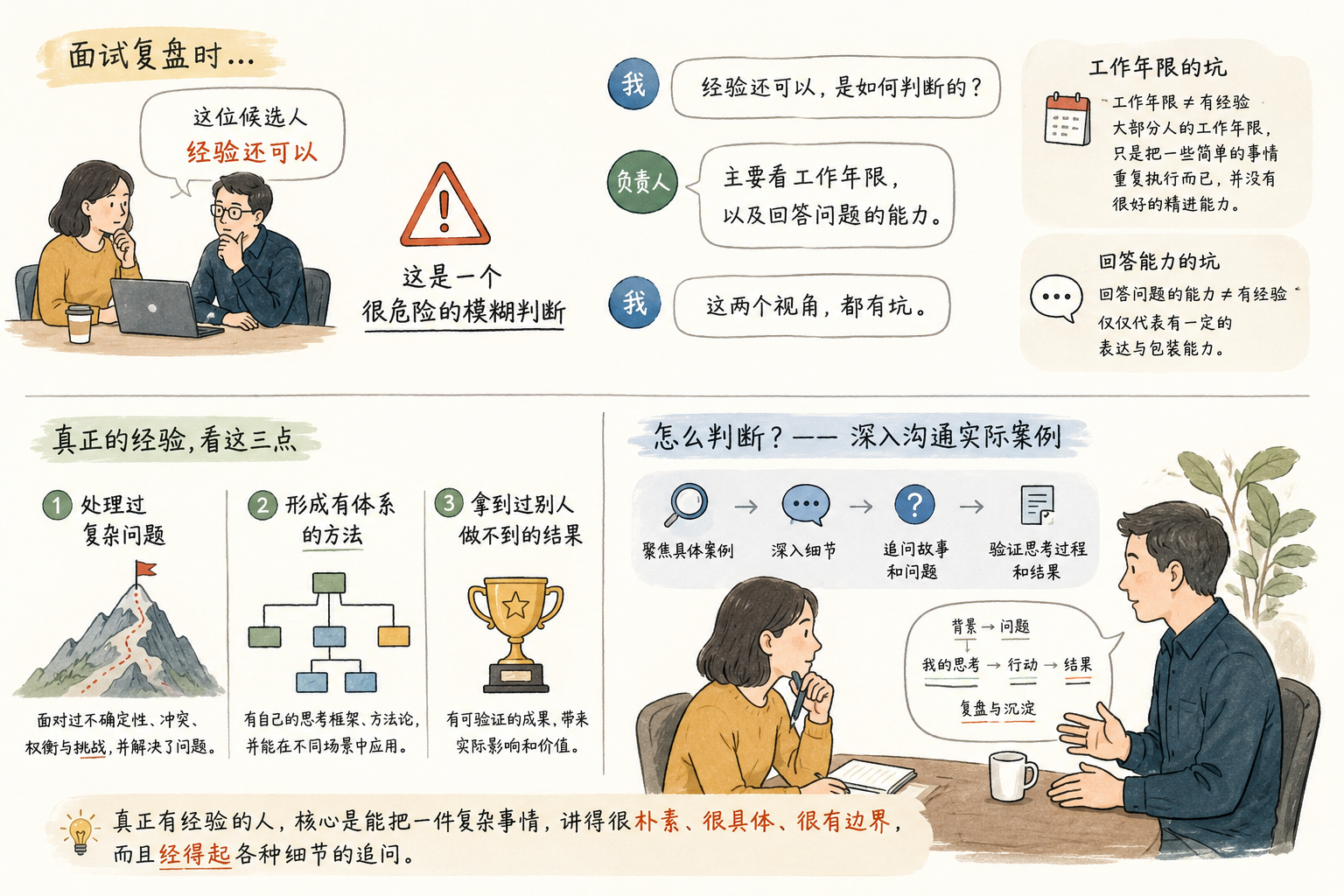
During a debrief with a hiring manager, I heard this evaluation of a candidate: “Their experience is okay.”
That phrase - “experience is okay” - is dangerously ambiguous.
I asked: How did you reach that conclusion? They replied: Mainly based on years of work history and how well they answered questions.
Both criteria carry hidden traps.
First, tenure ≠ experience. Most people repeat basic tasks year after year - without deepening skill or insight. Second, articulate answers ≠ real experience. They may simply reflect strong communication - or packaging skills.
True experience, in my view, hinges on three things:
- Has the candidate handled genuinely complex problems?
- Have they built coherent, reusable methods?
- Have they delivered outcomes others couldn’t replicate?
The best way to assess this? Drill into real cases. Ask for specifics. Follow up on contradictions. Probe the “how” and “why.”
Truly experienced people explain complexity with striking simplicity - concrete details, clear boundaries, and resilience under scrutiny.
Four Mindsets for the Age of Abundance
Inspired by We Are Gods, this section outlines four essential mindsets for thriving in abundance: Abundance Mindset, Longevity Mindset, Exponential Mindset, and Moonshot Mindset.
On Abundance
- Abundance has already arrived - yet many still operate from scarcity mental models.
- Today’s true scarcity isn’t information - it’s attention.
- Paradoxically, the more abundant an era becomes, the more anxiety ordinary people may feel.
- The future is already here - just unevenly distributed. The greatest inequity from new tech isn’t access - it’s opportunity flowing first to those who understand it.
- The gravest danger in abundance isn’t missing opportunity - it’s failing to see it. As technology advances, cognitive gaps widen rapidly.
- Hence the four mindsets: Abundance, Longevity, Exponential, Moonshot.
Scarcity vs. Abundance Mindset
- Scarcity mindset asks: How do we divide the cake? Abundance mindset asks: How do we bake a bigger one? Abundance thinking creates net new value.
- Much anxiety stems from applying old scarcity logic to new abundance opportunities. When you obsess over defending your slice, someone else is baking a whole new cake elsewhere.
- Abundance mindset reframes competition as co-creation. Winners in abundance-era markets rarely own the most resources - they’re best at recombining them.
Longevity Mindset
- Those who’ll benefit most from longevity tech are the ones managing their health today.
- Longevity mindset redefines time itself. AI extending human lifespan is no longer speculative - it’s widely accepted.
- With decades added to life expectancy, career planning and health habits must shift - and lifelong learning becomes non-negotiable.
Exponential Mindset
- The most counterintuitive thing about exponential change? Early stages look flat. Without this mindset, people underestimate early, misunderstand mid-stage, and miss late-stage entirely.
- The first half of exponential growth often resembles stagnation; the second half feels miraculous. Real opportunity hides in the deceptively slow early curve.
- Judging tech trends requires looking beyond current capability - to iteration speed. When a technology’s performance doubles consistently, conservatism becomes the riskiest stance.
Moonshot Mindset
- Moonshot mindset sets audacious goals within physical reality - not fantasy, but impossible goals broken down into executable steps.
- Big goals force method innovation: 10% improvement refines old systems; 10× improvement demands rebuilding them.
- Small targets invite incremental tweaks; massive ones compel rethinking fundamentals.
- Moonshot thinking starts with first-principles analysis - mapping constraints using physics and logic - to draw realistic boundaries for ambition.
- Any goal not violating fundamental laws shouldn’t be dismissed by inertia alone.
This Week’s Open-Source Updates
1. TokKit
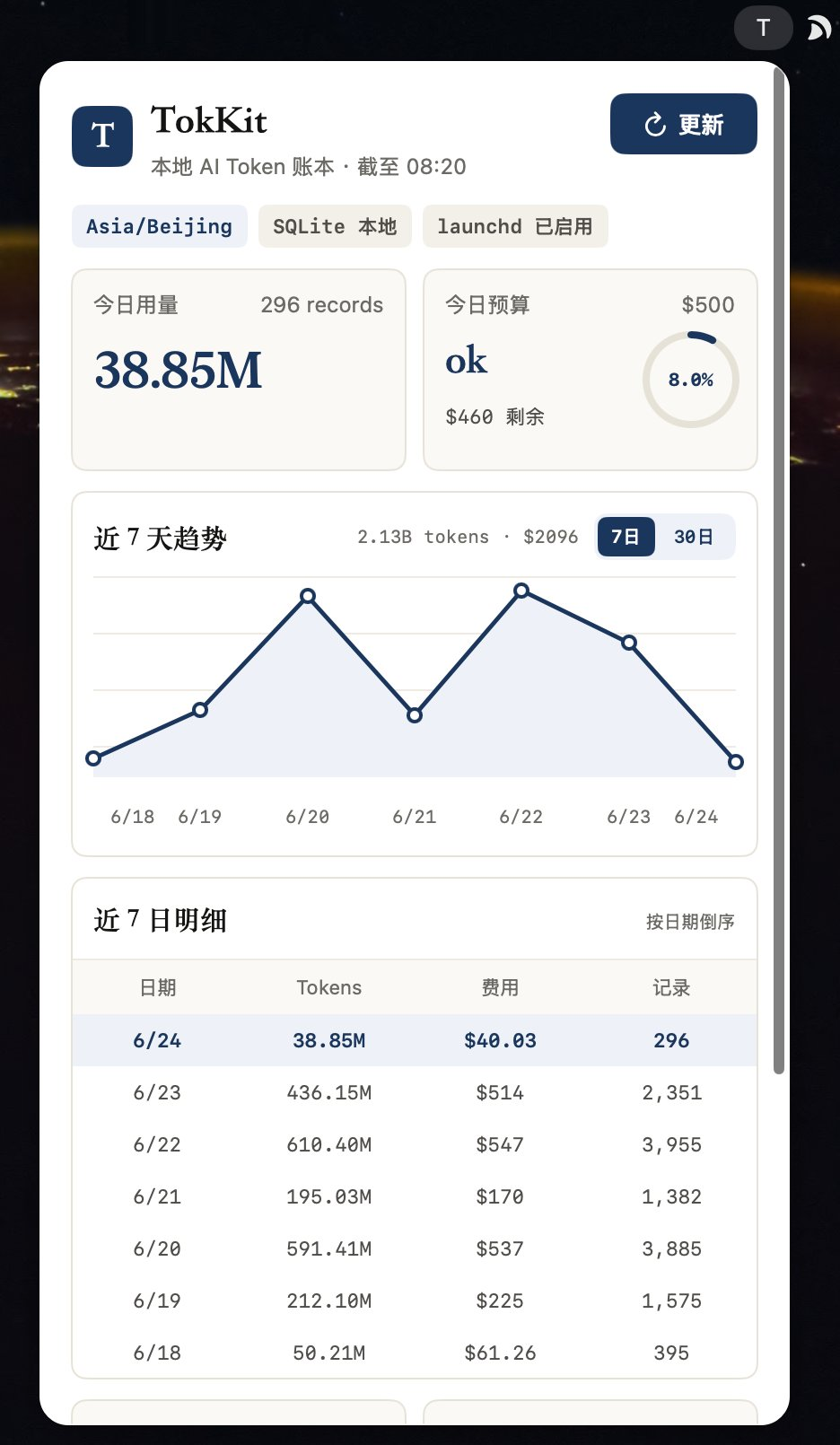
Upgraded our local token ledger tool, TokKit, with a macOS menu bar panel.
Click the icon in your top-right corner to instantly see:
- Today’s token usage
- 7-day and 30-day trends
- Detailed usage breakdown (last 7 days)
- Terminal and model-specific consumption
GitHub: ai.laoyao.cn
2. ChatGPT Crawling & Diagnostic Skill
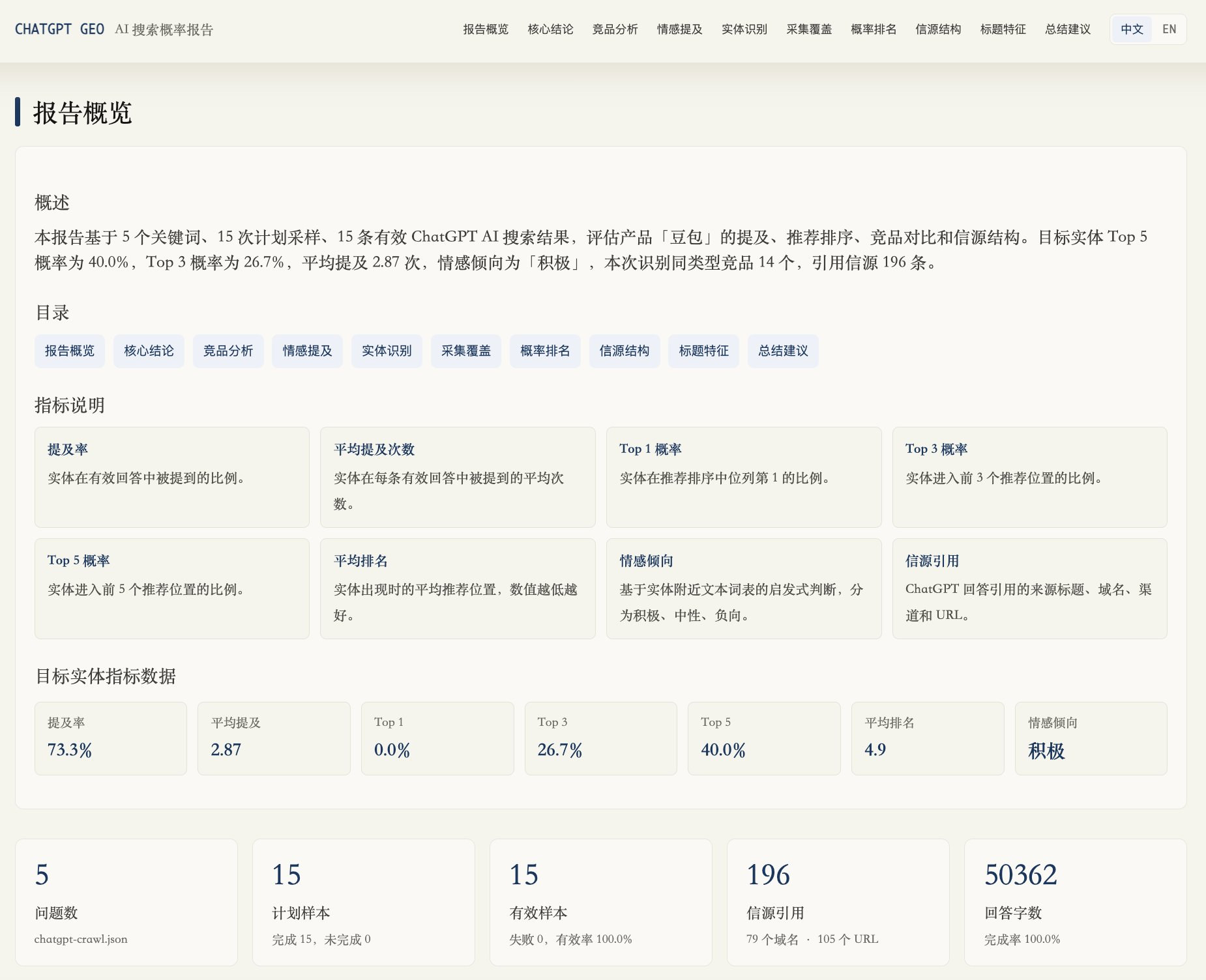
New GEO Skill: yao-chatgpt-crawler - for collecting, cleaning, and analyzing ChatGPT outputs.
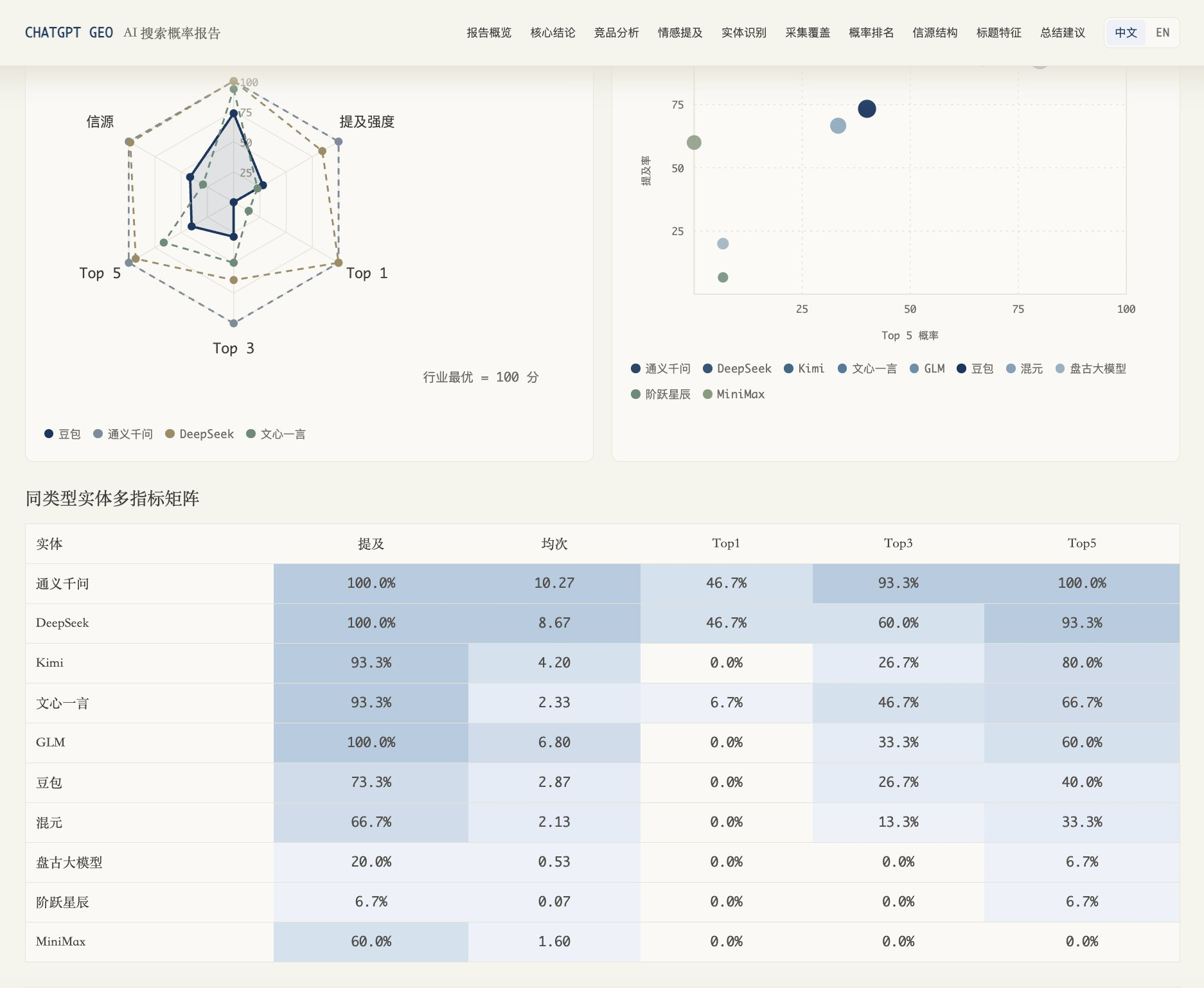
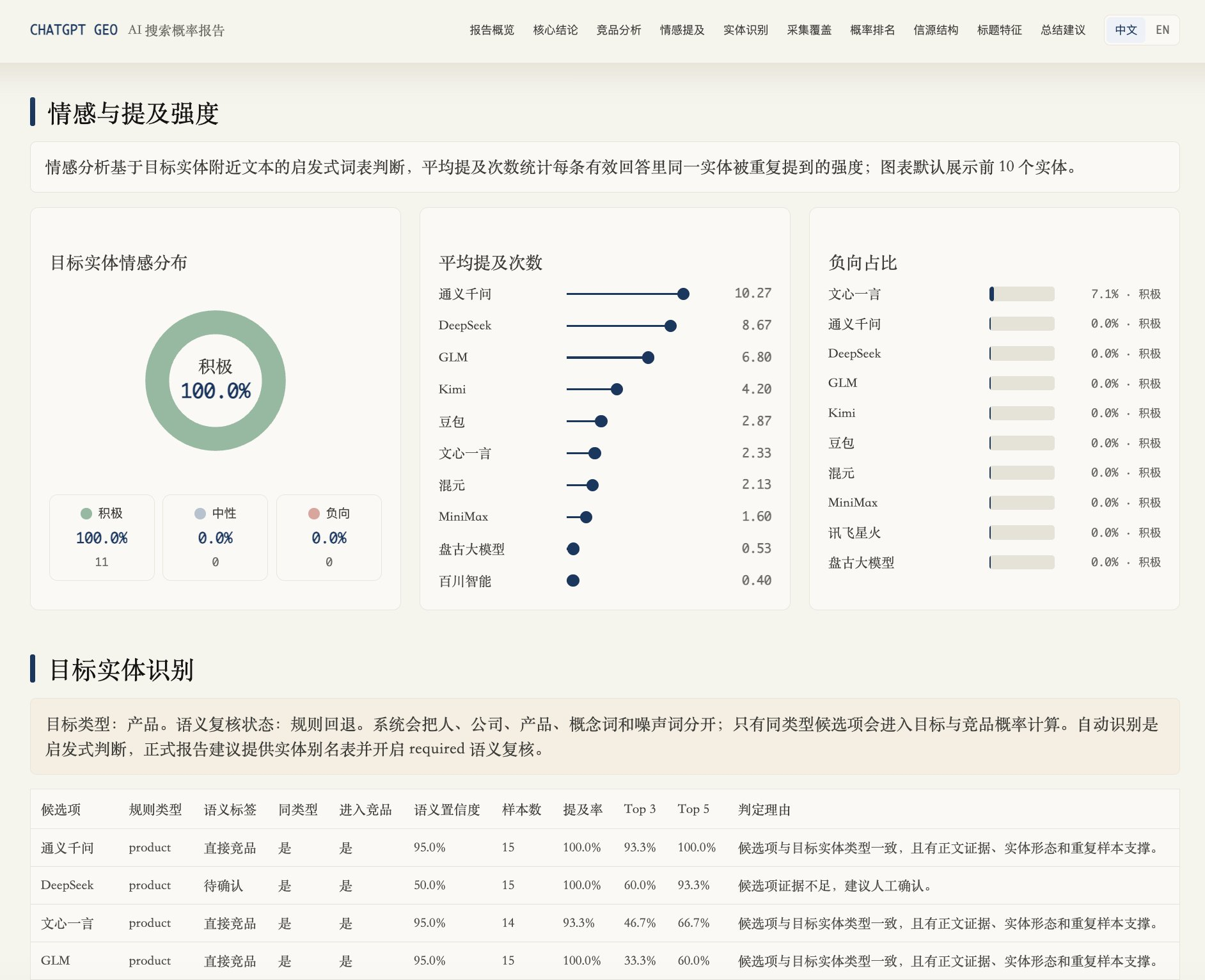
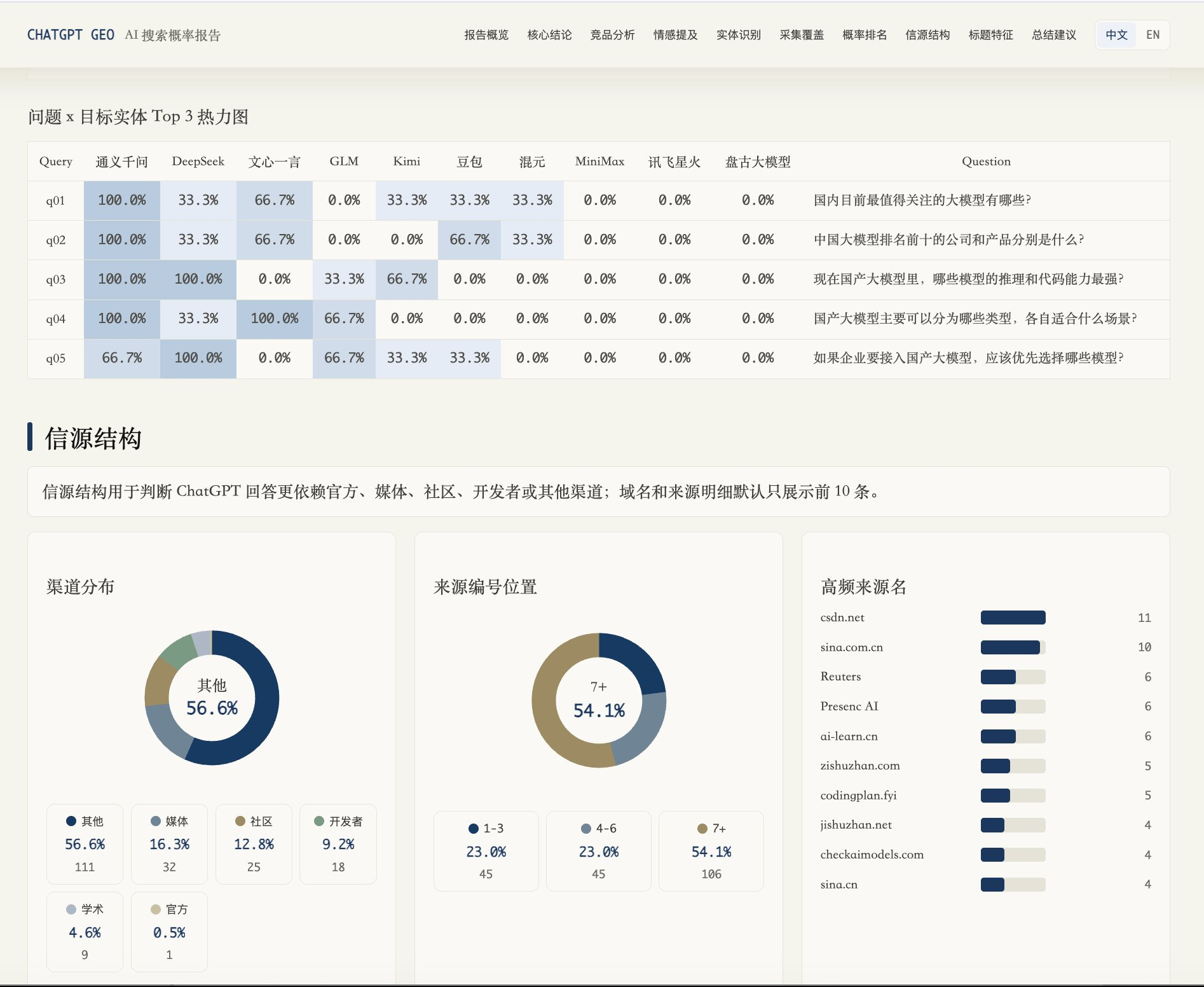
Real-world test case: Doubao (ByteDance’s AI assistant), assessed via ChatGPT’s GEO diagnostic report.
Workflow:
- Prepare question list, repetition count, target entity (e.g., “Doubao”), entity type, OpenCLI profile, and sampling interval.
- OpenCLI Browser Bridge connects to your logged-in ChatGPT Web session, running randomized, spaced queries.
- Post-collection, data is cleaned and aggregated into JSON, Markdown, Excel, and HTML reports.
- The HTML report analyzes:
- Entity mention rate & average mentions
- Top-1 / Top-3 / Top-5 probability
- Average ranking position
- Sentiment bias
- Source domains & URL structures
- Title intent
- Gap analysis vs. peer entities
- Entity classification distinguishes people, companies, products, concepts, and noise - excluding industry terms, generic categories, or URL parameters from competitor lists.
Key principle: Based on real ChatGPT Web behavior - not API simulation - for higher-fidelity GEO analysis.
Links:
- Skill repo: github.com
- Example report files: github.com
- HTML report preview: doc.laoyao.cn
3. GEOFlow
GEOFlow - the end-to-end GEO system - has been updated to v2.1.0.
Most recent improvements came directly from a Fortune 500 marketing leader who deployed GEOFlow internally and shared rich, actionable feedback.
Key upgrades:
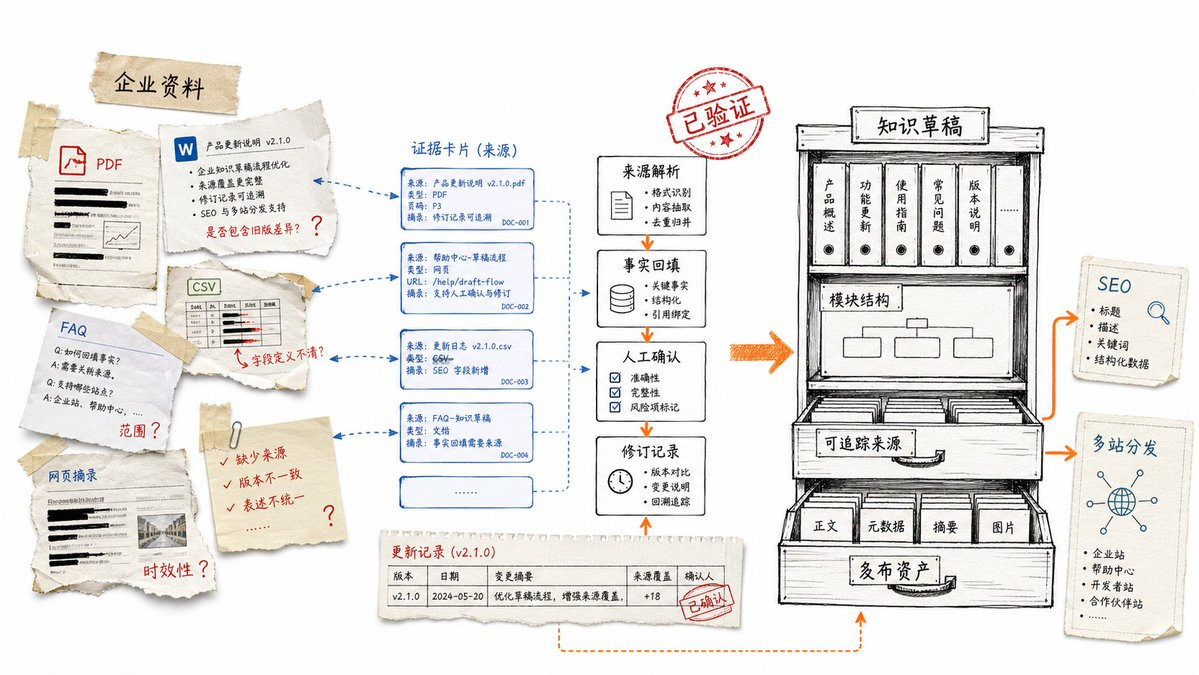
- Enterprise Knowledge Base Drafting Workflow: Upload or paste multiple documents (PDF, DOCX, TXT, etc.), auto-parse formats, then use AI to generate structured draft content - with full source attribution, revision tracking, and manual approval gates.
- Enhanced Frontend & Distribution Capabilities:
- Online topic editing
- Homepage module configuration
- Custom styling options
- AI-powered “APIHot” topic recommendations
- Unified SEO metadata management
- Visualized article distribution status
- Task routing strategies
- Target site sync settings
- Deployment Improvements:
- Installation state protection
- Default admin email configuration
- Redis-backed session storage
- Docker support + subdirectory deployment
Post-update, GEOFlow increasingly functions as a full-stack GEO + automated site network management system - covering knowledge base ingestion, AI drafting, human review, frontend publishing, cross-site distribution, synchronization, and operational analytics.
GitHub: github.com